Say the Number: Word-for-Word Money Scripts for Working Artists
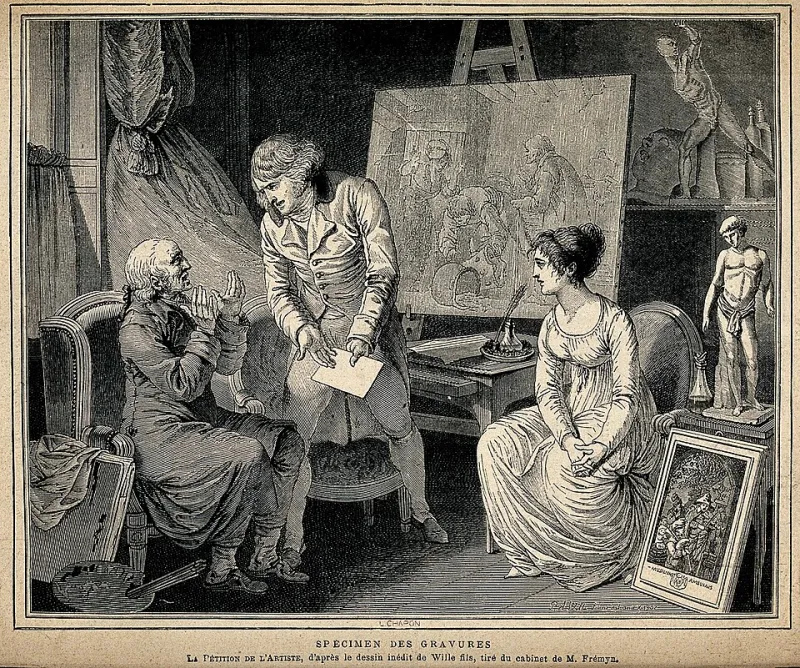
Photo: Unknown, CC BY 4.0, via Wikimedia Commons
In the United States, most working artists are also small-business owners. That means pricing conversations are part of the job—whether you are selling a painting, booking a mural, or taking a commission from a neighbor. The awkward part is rarely the math. It is the fear that saying a number will make you seem greedy, or that asking for a deposit will insult a friend.
Clear language solves more of this than confidence does. Below are word-for-word scripts you can adapt. They are not legal or tax advice, and your state’s rules on sales tax, contracts, and deposits may vary. But they can help you get through the conversation without apologizing for your own business.
Before the script: three ground rules
Know your floor. Add up materials, studio overhead, payment processing fees, your time, and the self-employment tax you will owe. That is your minimum. A quote below it is not a discount; it is a subsidy.
Separate the friend price from the regular price. Decide in advance whether you offer a friends-and-family rate, and what it is. Ten percent is a common, clean number. “Whatever feels fair” is not a rate; it is a trap.
Put it in writing. A simple email recap is enough: scope, price, deposit, timeline, and what happens if the project changes. You do not need a law degree to send a clear confirmation.
Script 1: Quoting a price
Client: “How much for a piece like this?”
You: “Thanks for thinking of me. For a piece at that size and level of detail, my price is $X. That includes [materials, one round of revisions, delivery, etc.]. I can hold that quote for fourteen days.”
If they push back with “That seems high,” do not drop the number on the spot. Try: “I price by the scope of the work, the materials, and the time it takes to do it well. I’m happy to adjust the size or materials to meet your budget.”
This keeps the conversation about the project instead of your worth as a person. It also gives the client a real choice: change the scope or pay for the scope.
Script 2: The friends-and-family discount
Friend: “Can you do it for less?”
You: “I have a standard friends-and-family rate of ten percent off my regular price. I can do that, or we can look at a smaller piece that fits your budget.”
If you do not offer a discount, say so plainly: “I’m not able to discount this one, but I can offer a payment plan if that helps.”
A discount should be a policy, not a mood. When you decide it in advance, you are less likely to resent the friend later—and less likely to set a precedent you cannot afford to repeat.
Script 3: Asking for a deposit
You: “To reserve your spot on my calendar, I ask for a 50% deposit. The balance is due before pickup or shipping. I’ll send an invoice today.”
For commissions, add your cancellation terms: “The deposit is refundable until I begin work. After that, it covers materials and scheduled studio time.”
Deposits are standard in many creative businesses because they protect both sides. They also filter out people who are not serious. If a client refuses any deposit for a custom project, that is useful information.
Script 4: Responding to exposure requests
Organizer: “We can’t pay, but it’s great exposure.”
You: “Thanks for the invitation. I only take on unpaid projects when they meet my current goals, and this one doesn’t fit right now. If you have a budget for artist fees in the future, I’d be glad to talk.”
If you want to keep the door open, offer an alternative: “I can’t donate the work, but I can offer a print at $X or a smaller original at $Y.”
Exposure is not automatically worthless. A museum show, a well-trafficked public mural, or a teaching demo can be a legitimate investment. But “exposure” is not a price. Decide what it is worth to you before the ask arrives.
Script 5: Payment plans and late payments
You: “I can split this into three payments of $X, due on [dates]. Work begins after the first payment.”
Late payment: “Just a friendly reminder that invoice #123 is past due. Could you let me know when I can expect payment?”
If you have a late fee in your agreement, mention it once: “As noted in the agreement, a 5% late fee applies after thirty days.” Keep the tone neutral. You are not asking for a favor; you are following the terms.
Script 6: Scope creep
Client: “Can you also add [extra thing]?”
You: “That’s outside our original scope. I can add it for $X and update the timeline, or we can keep the current plan.”
Scope creep is normal. Resentment happens when you absorb it silently. Give the client a clear price for the change, and let them decide.
Make the next conversation easier
Keep templates for quotes, invoices, and deposit reminders. Use a separate bank account for art income if you can. Set aside money for taxes as you go. Check your state’s sales tax rules for physical artwork and commissions. And remember that a boundary is not a personality flaw. It is a business tool.
At Art350, we talk a lot about creative growth. Pricing clearly is part of that growth. It protects your studio time, your income, and—counterintuitively—your relationships. The friend who hears a clear number today is less likely to feel blindsided tomorrow.