Before You Make Art Together, Read This: The Creative Partnership Agreement Every Collaboration Needs
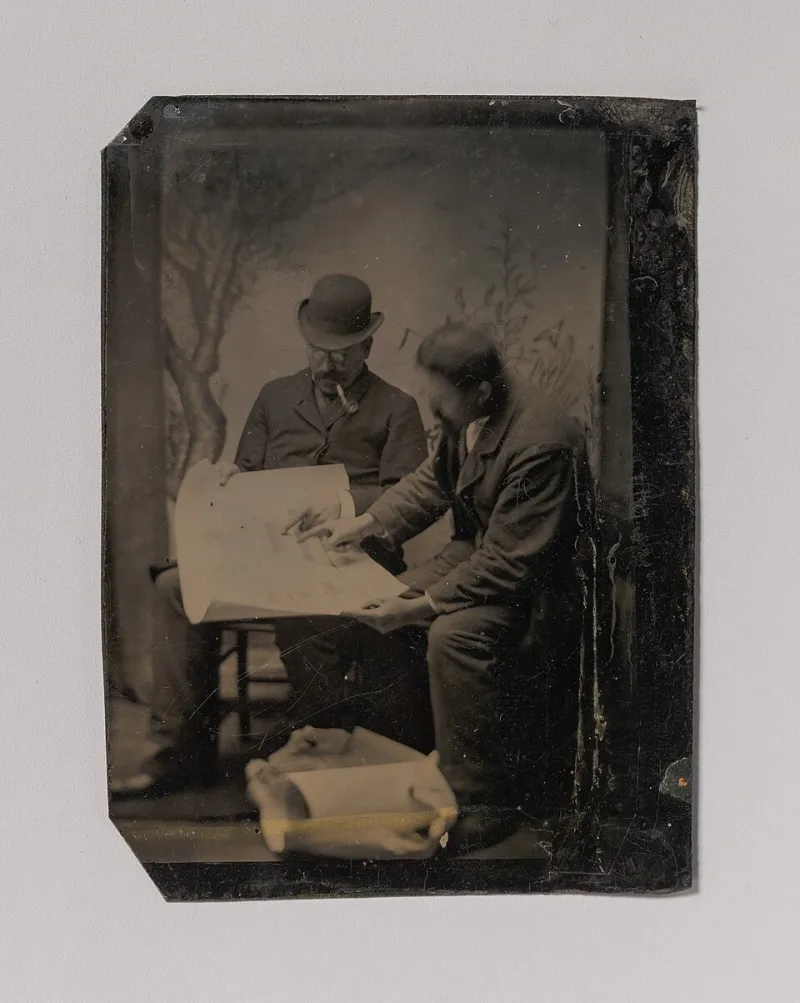
Photo: Unknown authorUnknown author, CC0, via Wikimedia Commons
Artist collaborations make great stories. Two creative minds, one shared vision, work that neither could have made alone. The mythology around creative partnership is genuinely romantic — think Warhol's Factory, the Eames office, Christo and Jeanne-Claude wrapping things in fabric on a scale that required an entire movement.
What those stories leave out is the paperwork.
Not because paperwork is more important than the creative work — it isn't. But because the absence of clear agreements is one of the most reliable ways to turn a great collaboration into a painful one. And the artists who get burned are almost never the ones who were careless about their craft. They're the ones who were careful about everything except the business side of working together.
This guide is for the collaboration you're excited about right now. Let's talk about how to protect it.
Why Artists Skip This Step (And Why That's Understandable)
Let's be honest about why most artist collaborations don't have formal agreements: it feels weird to ask for one.
When you're excited about a project with someone you trust — a friend, a fellow artist you admire, a creative partner you've been wanting to work with — sitting down to draft a contract feels like announcing that you don't actually trust them. It can feel transactional, overly formal, or like you're anticipating failure before you've started.
Those feelings are real. They're also not a good reason to skip the conversation.
The purpose of a collaboration agreement isn't to plan for the worst. It's to have a clear, shared understanding of how the partnership works before any ambiguity has a chance to become a problem. Most of the disputes that end creative partnerships aren't caused by bad intentions — they're caused by two people who each assumed something different without ever saying it out loud.
The Five Things Every Collaboration Agreement Should Cover
1. Ownership and Intellectual Property
This is the big one. Who owns the work you make together?
In the US, the default legal answer for collaborative creative work is joint ownership — meaning both parties own an undivided interest in the whole work, and either party can use it without the other's permission (though they typically must account for profits to the other). That default might not be what either of you actually wants.
Your agreement should specify: Is this a true co-ownership arrangement? Does one person hold the copyright while the other has usage rights? What happens to the work if the collaboration ends — does it get split, does one person buy out the other, does it get retired entirely?
If you're creating a body of work together — say, a series of prints or a jointly produced collection — you'll also want to address what each partner can do with those pieces independently. Can one of you license an image from the series without the other's sign-off? Can either of you include the work in a solo show?
2. Credit and Attribution
How will the work be credited? This sounds simple, but it generates real friction. Will you use both names equally? A studio name that belongs to the collaboration? What order do the names appear in — and does that order imply anything about relative contribution?
Also worth addressing: what happens when work from the collaboration gets featured in press, in a grant application, or on a CV? Both partners should have the same understanding of how to describe the work and their role in it.
3. Financial Arrangements
Money is where vague agreements become expensive misunderstandings.
Your agreement should address how income from the collaboration gets split — and whether that split is equal regardless of who did what, or weighted based on contribution. It should also cover expenses: who fronts the cost of materials, studio time, or production fees, and how are those costs reimbursed?
If the collaboration produces work that sells, you'll need to decide who collects payment, who manages the relationship with any galleries or clients involved, and how and when the revenue gets distributed. If one partner has significantly more overhead than the other — say, one of you is providing the studio space — that should be factored in.
4. Decision-Making and Roles
One of the most common sources of tension in creative partnerships is an unclear decision-making structure. When you disagree about the direction of a piece, how do you resolve it? When one partner wants to take the collaboration in a new direction, what's the process for making that call?
Your agreement doesn't need to be a corporate org chart. But it should make clear who has final say on what — creative decisions, business decisions, public communications — and what happens when partners genuinely can't agree.
Some collaborations work best with a clearly designated lead on different areas: one person handles client communications and sales, the other handles production and logistics. Others operate as true equals on everything, with a commitment to only move forward on decisions that both partners support. Either model can work. The key is agreeing on it in advance.
5. Exit Terms
Every collaboration ends eventually — ideally on good terms and by mutual agreement, but not always. Your agreement should outline what happens if one partner wants to leave, if the collaboration is dissolved, or if one partner dies or becomes incapacitated.
This includes what happens to works in progress, to finished inventory, to any brand or name associated with the collaboration, and to any ongoing contracts or commitments. Addressing this in advance isn't morbid — it's responsible. And having it in writing means you're not negotiating the terms of a breakup while you're also dealing with the emotional fallout of it.
A Real-World Cautionary Tale
Two illustrators in the Pacific Northwest — we'll call them J and R — built a successful collaborative print business over three years. When their partnership dissolved, they discovered they'd never agreed on who owned the original designs. Both assumed ownership. Both were legally right under default joint authorship rules — which meant neither could stop the other from continuing to sell prints from the shared catalog.
The situation wasn't illegal. It was just painful, confusing, and ultimately damaging to both of their individual reputations as the dispute played out in a community where everyone knew everyone.
A single conversation at the beginning — with a simple written agreement — would have prevented all of it.
Getting the Agreement in Place
You don't need an expensive attorney to create a basic collaboration agreement, though consulting one is worth it for high-stakes projects or significant financial arrangements. Organizations like Volunteer Lawyers for the Arts (VLA) offer free or low-cost legal help to artists across the US, and many state arts councils have resources specifically for creative business matters.
For straightforward collaborations, a written document that both parties sign and date — even a detailed email exchange where you both explicitly agree to the terms — is better than nothing. The act of writing it down forces clarity that verbal conversations often skip over.
Start the conversation early, before you're deep into the work. Frame it the way it actually is: not as distrust, but as respect for the collaboration and for each other. The partnerships that last are the ones where both people felt safe enough to have the uncomfortable conversations at the beginning.
The art you make together deserves that foundation.