The No-Website Art Business: How Artists Are Earning Full-Time Income Without Ever Going Online to Sell
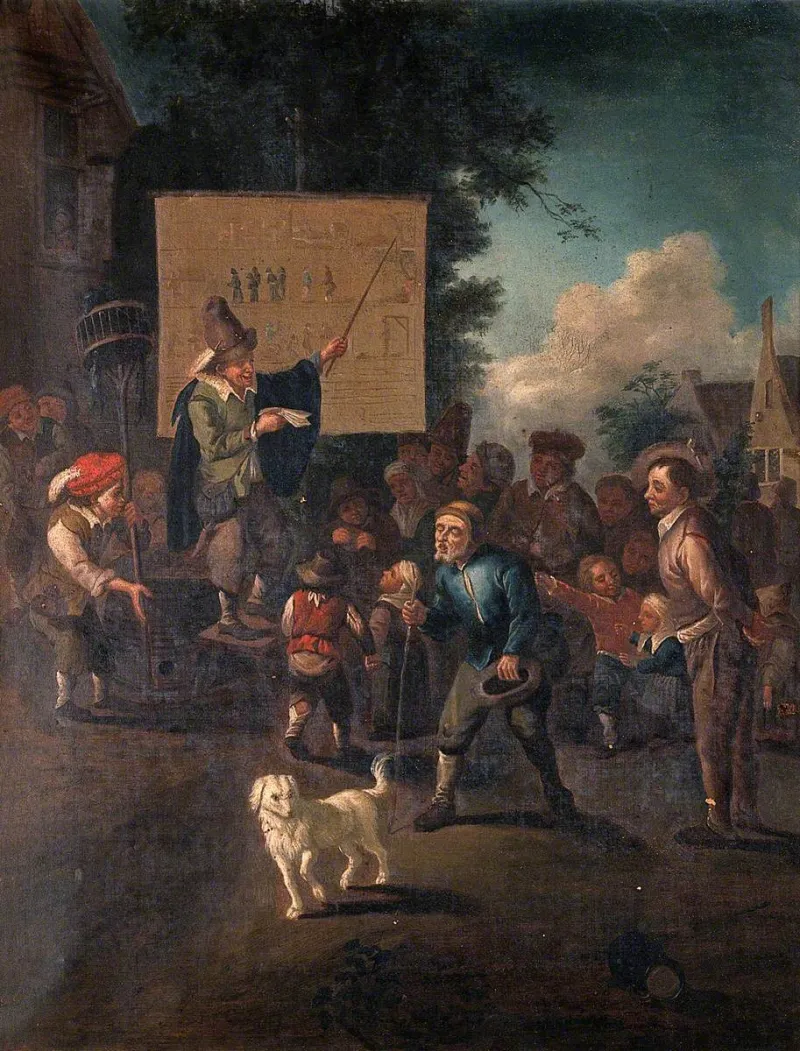
Photo: Christian Wilhelm Ernst Dietrich, Public domain, via Wikimedia Commons
The Myth of the Mandatory Website
Open any article about making money as an artist and you'll run into the same checklist within the first few paragraphs: build a website, set up an online shop, grow your social following, run email campaigns. It's presented as the obvious path, almost like there's no other way.
But spend time talking to working artists — particularly those who've been at it for more than a few years — and a different picture emerges. A surprising number of the most financially stable artists in communities across the country have built their entire income without a single Shopify page, without an Etsy shop, and in some cases without even a functioning website.
They're not luddites. They're just building their businesses on something more durable than algorithm traffic: actual human relationships.
Why Local Can Beat Global
The internet is genuinely useful for reaching audiences. But it comes with real costs that often go undiscussed. There's the time cost — maintaining a website, managing listings, creating content, running ads. There's the platform risk — your Etsy shop can be suspended, your Instagram reach can crater overnight. And there's the margin hit — platform fees, shipping costs, and the pressure to price competitively against artists from everywhere on earth.
Local relationships sidestep most of these problems. When your buyers know you personally, trust is built in. When a business owner has shaken your hand and seen your work in person, the sales conversation is completely different. When a client found you through a mutual friend, they're not comparison shopping on price.
Hyperlocal art businesses tend to have higher margins, lower customer acquisition costs, and more stable repeat business than their online counterparts. They're also, for a lot of artists, more enjoyable to run.
The Farmers Market Model
For artists who make smaller, more accessible work — prints, ceramics, jewelry, illustrated goods — the farmers market and craft fair circuit remains one of the most reliable direct-sales channels in the country.
This isn't news. But what's changed is how sophisticated the strategy has gotten. Artists who are genuinely thriving in this space aren't just showing up and hoping. They're treating their market presence like a retail operation: consistent booth design, strategic product mix, price points calibrated for impulse buys alongside investment pieces, and — most importantly — systems for capturing repeat customers.
A ceramicist based in Asheville, North Carolina, does around $80,000 a year exclusively through farmers markets and two regional craft fairs. Her secret, she'll tell you, is simple: she knows her regulars by name. She texts them when she has new work. She holds pieces for people who ask. The relationship is the product as much as the pottery is.
The infrastructure for this is low-tech: a square card reader, a mailing list sign-up sheet, and a phone. That's it.
Wholesale Relationships With Local Businesses
One of the most underused channels for independent artists is wholesale — selling work in bulk or on consignment to local retailers, restaurants, hotels, and specialty shops.
This model works especially well for artists who make work at volume: printmakers, illustrators, photographers, textile artists, ceramic production potters. A local gift shop, boutique hotel, or upscale restaurant is a genuine sales partner, not just a buyer. They have existing foot traffic. They have customers who are already in a purchasing mindset. And they're often actively looking for local, authentic, story-driven work to differentiate themselves.
The pitch is usually simpler than artists expect. Walk in, introduce yourself, show your work, and ask if they work with local artists. Many do, or want to. Standard consignment terms run 40-60% to the retailer, which can feel steep — but the math often works because the volume is higher and you're not doing any of the selling yourself.
A printmaker in Denver has placed her work in eleven local businesses, from a coffee roaster to a boutique ski shop. She does a monthly check-in circuit — coffee and a conversation at each location — and it takes about half a day. That network generates roughly a third of her annual income with almost no ongoing effort.
Building a Direct Commission Pipeline
Commissions are the highest-margin work most artists can do, and the most reliable source of commissions isn't a website — it's a referral network.
Building this kind of pipeline takes time, but the structure is straightforward. Start with every commission you've already completed. Did the client love the work? Ask them directly: "Do you know anyone else who might be interested in something similar?" That simple question, asked consistently, compounds over years into a steady stream of inbound work.
The other key is visibility in the right local contexts. Community events, neighborhood associations, local business groups, and even school fundraisers put you in front of people who have money and want to support local artists. These aren't sales pitches — they're relationship starts. The commission conversation often happens months later, when someone remembers they met you.
A portrait painter in Austin built her entire practice this way. She hasn't run a single ad in six years. Every client came through a referral from a previous client. Her waitlist currently runs four months.
The Local Business Partnership Play
Beyond wholesale, there's a broader category of local business relationships that can generate consistent income: partnerships.
Think about businesses that have physical space and want it to look good: law firms, medical offices, real estate companies, boutique hotels, restaurants, co-working spaces. These businesses often have real budgets for art — either to purchase outright or to license for display — and they value the story of working with a local artist.
The approach that works best here is direct outreach, in person or by phone. Email tends to disappear. Showing up with a physical portfolio, or dropping off a small framed piece as a gift with a card, tends to get remembered. It's old-fashioned, and it works.
One abstract painter in Minneapolis has a rotating display arrangement with five local businesses. Each business pays a quarterly fee to display her work, and any piece that sells, she splits with them. She calls it her "gallery without walls," and it generates steady income without any of the overhead of an actual gallery relationship.
What You Actually Need to Make This Work
The infrastructure for a hyperlocal art business is genuinely minimal. You need:
A simple way to take payment. Square, Venmo, cash — doesn't matter much. Just make it easy.
A way to stay in touch with buyers. A basic email list, even just a spreadsheet of names and emails, is enough to start. MailChimp's free tier handles the first 500 contacts.
A physical portfolio. A clean binder of printed work, or a tablet with a curated gallery, for in-person conversations.
Consistency. Show up to the same markets. Check in with your wholesale partners. Follow up with commission inquiries. The relationship-based business runs on reliability.
You don't need to be everywhere. You need to be somewhere, consistently, and be genuinely good to work with.
The Long Game
The online art market is real, and for some artists it's the right model. But it's not the only model, and for artists who'd rather spend their energy making work than managing a digital presence, the local relationship path is more viable than it's ever been.
People want to buy from artists they know. They want the story. They want to be able to say "I know her" when a guest compliments the piece on their wall. That desire isn't going anywhere, and it doesn't require a website to fulfill.
Start local. Stay consistent. Build relationships like they're the business — because they are.