How the Old Masters Ran Their Studios Like a Business — And What That Blueprint Means for Artists Today
When we picture Rubens or Raphael, we tend to imagine a solitary genius hunched over a canvas, paint-stained and inspired. The reality was a lot more interesting — and a lot more practical. These artists were running what we'd recognize today as small businesses with multiple revenue streams, a trained workforce, and a brand identity strong enough to outlast their own lifetimes.
The workshop system that dominated European art from the Renaissance through the Baroque period wasn't a romantic accident. It was a deliberate, functional model for sustaining a creative career. And honestly? It maps onto 2025 surprisingly well.
What the Workshop Actually Was
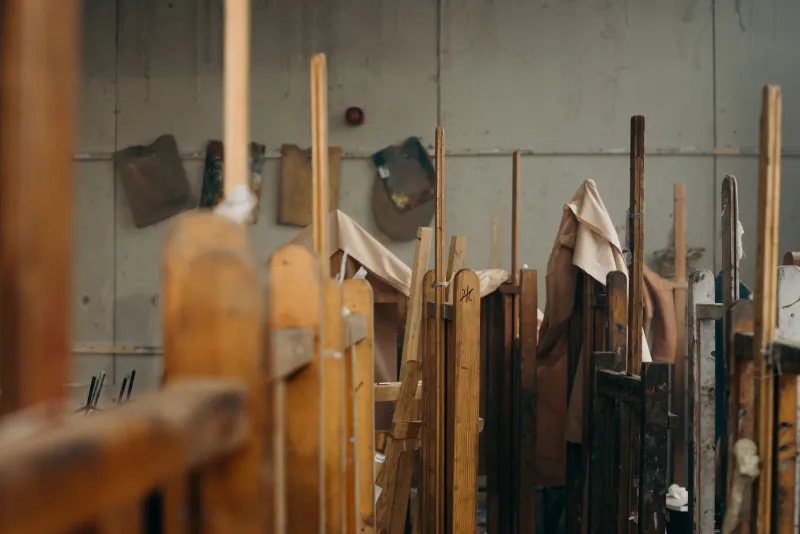
At its core, the old master workshop — or bottega in Italian — was a production studio. A master artist sat at the top, setting the creative vision and maintaining the reputation. Below them were journeymen and apprentices at various skill levels, each contributing to a pipeline of work that the master alone could never have completed.
Clients commissioned paintings, frescoes, sculptures, and decorative objects. The master designed the composition, handled the most technically demanding passages — faces, hands, key figures — and signed off on the finished product. Apprentices ground pigments, stretched canvases, and gradually took on more responsibility as their skills developed.
This wasn't cutting corners. It was leverage. And it meant a single master could fulfill commissions from churches, nobility, and merchant families simultaneously without burning out or leaving money on the table.
Three Revenue Streams That Ran in Parallel
Here's where it gets genuinely useful for working artists today. The workshop wasn't relying on a single source of income. It was running at least three distinct revenue streams at the same time.
Commissions. The big-ticket work. A wealthy patron wanted a portrait, an altarpiece, a ceiling mural. These were negotiated contracts with deposits, milestone payments, and final settlement on delivery — not unlike how a commercial illustrator or muralist operates today.
Training and education. Apprentices didn't just show up out of the goodness of their hearts. Families paid master artists to train their children. The workshop was, in effect, running a vocational school. The master exchanged knowledge and professional development for labor and tuition. Sound familiar? It should — it's essentially what every working artist who teaches workshops or sells courses is doing right now.
Reproduction and licensing. This one surprises people. Prints and engravings of popular compositions were sold widely, sometimes with the master's explicit involvement, sometimes not. Artists like Dürer were acutely aware of their image rights and actively worked to protect and profit from reproductions of their work. The concept of licensing your style or selling prints wasn't invented by print-on-demand platforms — it's been part of the artist's toolkit for centuries.
The Brand Was the Business
What held all of this together was reputation — what we'd call personal brand today. When a patron commissioned a work from Rembrandt's studio, they were buying the Rembrandt name as much as the painting itself. The master's distinctive style, their known quality, their social standing — all of it was the product.
This is why apprentices were trained to paint in the style of their master, not to develop their own voice right away. The workshop's output had to be consistent. A collector buying a Rubens needed to trust that what arrived matched what they expected.
For modern artists, this translates directly to the idea of having a recognizable visual identity — a body of work that reads as unmistakably yours. It's the thing that makes someone follow you on Instagram, buy your prints, or sign up for your class, because they already know what you stand for creatively.
What This Looks Like in a 2025 Studio
You don't need a physical workshop full of apprentices to apply this thinking. What you do need is a willingness to treat your creative practice as a layered business rather than a single product.
Layer one: Your signature work. This is your equivalent of the master's commissions — the work that commands your best prices and carries your name most visibly. Custom commissions, original paintings, bespoke design projects. High effort, high value, limited volume.
Layer two: Education and community. If you've got skills, there are people who want to learn them. That might look like a Skillshare course, a Patreon with behind-the-scenes content, a local workshop at your studio, or a membership community where you share process and critique work. This is your apprenticeship model — you're exchanging knowledge for income, exactly like masters did 400 years ago.
Layer three: Scalable products. Prints, digital downloads, licensed patterns, surface design — anything that lets your creative work generate income without requiring you to personally execute every unit. This is your reproduction and licensing stream. Platforms like Society6, Redbubble, or direct Shopify stores make this more accessible than ever.
The magic isn't in any one of these streams. It's in running all three at once, so that a slow month for commissions doesn't crater your entire income.
The Collaboration Piece People Overlook
One underappreciated aspect of the workshop system was how fluidly artists collaborated — not just within a single studio, but across them. Masters referred work to each other, shared technical knowledge, and sometimes contributed to each other's projects. The art world of 16th-century Florence was a network, not a collection of isolated solo practitioners.
For contemporary artists, this is a real opportunity. Collaborating with other creatives — co-teaching a workshop, bundling products with a complementary maker, contributing to a group show or zine — creates exposure and income that a solo practice can't always generate on its own. The old masters weren't precious about collaboration. Neither should you be.
You Don't Have to Reinvent Anything
There's something genuinely reassuring about the fact that artists have been navigating the tension between creative integrity and financial sustainability for at least 350 years. The workshop system wasn't a compromise — it was a solution. A practical, proven framework for making a living from art without abandoning what makes the art worth making.
You're not starting from zero. You're inheriting a blueprint.
The specific tools have changed — nobody's grinding lapis lazuli by hand anymore, and your apprentices probably live in different time zones. But the underlying logic holds: build a recognizable body of work, teach what you know, make your creativity scalable, and don't depend on a single income stream to keep the lights on.
The old masters figured this out with quill pens and guild contracts. You've got WiFi and a global audience. The advantage is yours.