Gray Hair, Fresh Canvases: The Case for the Over-50 Art Boom
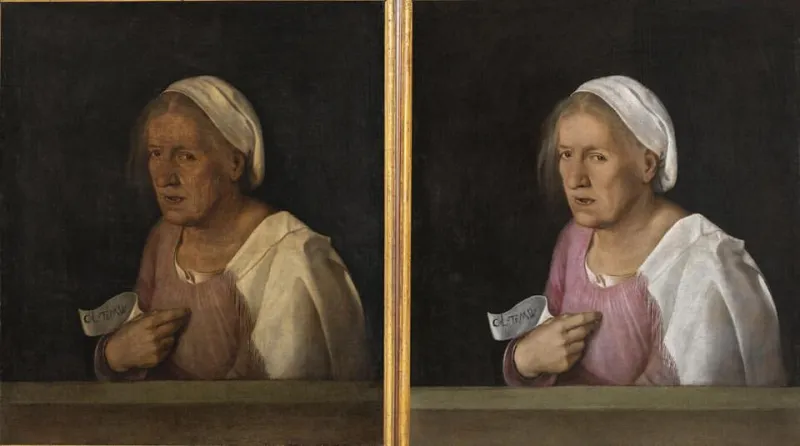
Photo: Giorgione, Public domain, via Wikimedia Commons
Walk into a beginning drawing class at almost any community college or art center in America right now, and count the gray heads. You'll count more than you did ten years ago. A lot more.
This isn't a vibe — it's a trend with numbers behind it. Industry trackers have watched the hobby economy swell for years, and art enrollment data from community education programs consistently shows the fastest-growing segment is students over 50. Retirement and empty-nesting have handed millions of Americans two rare commodities: time and a reason to ask who they are now. For a growing number, the answer involves a sketchbook.
I'll be upfront about my bias: I think late-blooming artists are undervalued, underestimated, and — in the gallery world especially — quietly discriminated against. Here's the case for why that's backwards.
The Stereotype vs. the Student
The cultural image of the retiree taking up painting is gentle condescension: a pleasant hobby, something to keep hands busy, maybe a watercolor of a lighthouse for the grandkids. The word "dabble" does a lot of quiet work here.
But spend any time around actual over-50 art students and a different picture emerges. These are frequently the most committed people in the room. They've raised kids, run businesses, survived careers. They know how to show up, take feedback, and practice something hard without a participation trophy.
Compare that to the traditional art student archetype — talented but scattered, allergic to routine, waiting for inspiration. Ask any art instructor which student they'd bet on and watch them hesitate.
Why the Learning Curve Is a Myth (Mostly)
The biggest fear I hear from older beginners is that they've "missed the window." That the 10,000 hours needed to get good require a 20-year-old's brain and a 20-year-old's schedule.
The brain part is shaky — adult neuroplasticity is real, and motor learning doesn't expire at 50. The schedule part is exactly backwards. A 25-year-old with two jobs and roommates struggles to find three focused hours a week. A 58-year-old recent retiree can find fifteen, and often does.
There's also something older beginners bring that no 20-year-old can: reference material. Six decades of looking at the world, raising humans, working jobs, and surviving loss is not a distraction from art. It's the content. Young artists often struggle to find something to say. Late bloomers are overflowing with it.
The Real Barriers — Let's Not Pretend Otherwise
That said, honesty requires naming what's actually hard, and it isn't motor skills.
Ageism in the art world is real. Galleries prize the mythology of the young genius, and a 62-year-old emerging artist disrupts that narrative. Curators who'd champion a 26-year-old's "fresh voice" sometimes file a 62-year-old under "hobbyist" before seeing a single piece. This is lazy thinking, and it's on the industry to fix — but it's a real headwind for anyone seeking representation.
Self-consciousness is the quieter killer. Beginning anything at 50 means being visibly bad at something in public, often after decades of being competent at your job. That stings in ways a 19-year-old, who has spent their whole life being a beginner at things, can't fully appreciate.
The learning curve is still a curve. Hands will be clumsy. Perspective will be wrong. The gap between taste and ability — the famous taste gap — hurts at every age, and maybe more when you've spent decades with refined eyes and untrained hands.
None of these are trivial. All of them are beatable, and the artists who beat them tend to do it with the same tools: consistent practice, community classes that normalize the struggle, and a refusal to measure themselves against the Instagram highlight reel.
The Market Is Already Shifting
Here's where the business case gets interesting. Online art education platforms have noticed the demographic and are building for it. Community art centers report waiting lists. And collectors, notably, care about the work, not the résumé — a strong painting by a first-time exhibitor sells on its merits.
There's also a second-act economy forming around these artists: juried community shows, online print shops, local markets, teaching others once skills develop. The old gatekeeping path — MFA, gallery, critical notice — is now one road among many, and it was never the only one that mattered.
A Modest Proposal for the Art World
If galleries and institutions want to be taken seriously about inclusion, age belongs on the list. A 55-year-old emerging artist has decades of productive years ahead and, often, more discipline than students half their age. The "emerging artist" label should describe the career stage, not the birth certificate.
And if you're over 50 and have been circling the idea of making art — consider this your nudge. The worst case is a few hundred awkward drawings. The best case is the second act you'll wonder why you waited for.
The students over 50 I've talked to all say some version of the same thing: "I should have started sooner." But none of them say they regret starting. That's the whole argument, really. The window never closes. It just gets quieter until you open it.