The Paycheck Studio: Why a Day Job Can Be an Artist’s Quiet Advantage
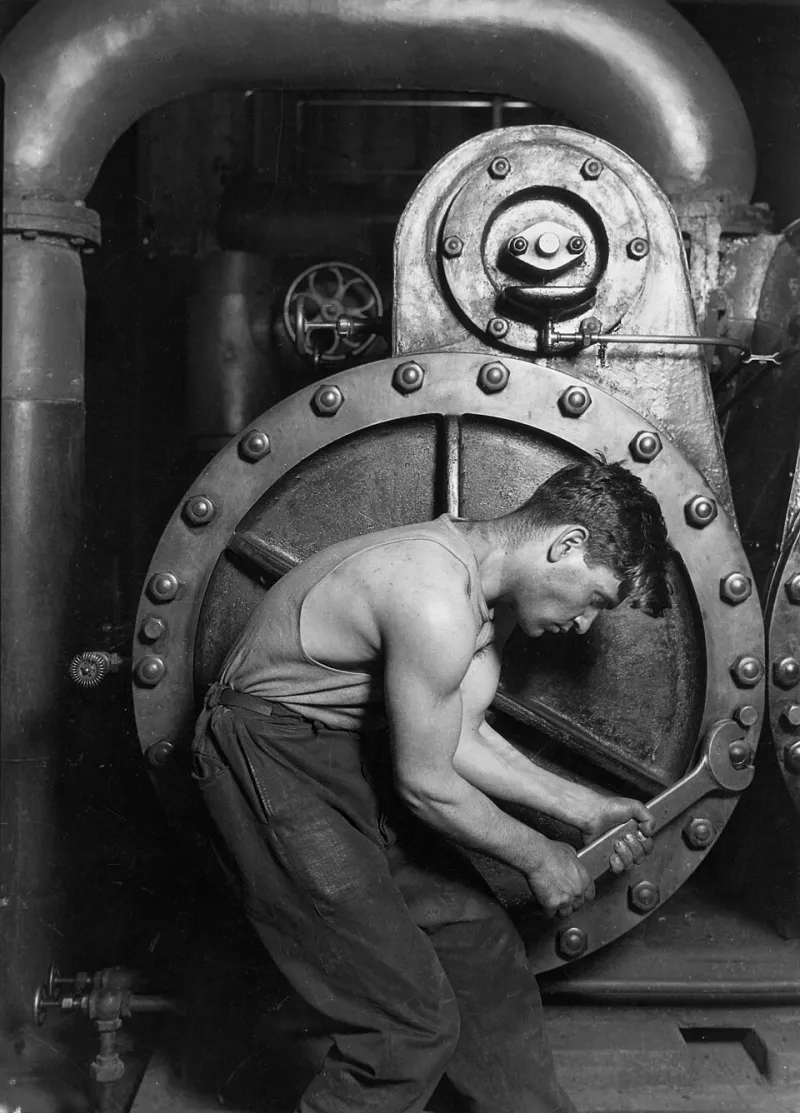
Photo: Lewis Hine, Public domain, via Wikimedia Commons
In 2026, the romantic story about art careers is still the same: quit the job, rent the cabin, wait for the muse. It makes for a great documentary. It is also, for most people, a terrible business plan.
A growing number of American artists are telling a quieter story. They keep the day job—the nursing shift, the warehouse schedule, the school-year calendar—and treat it not as a failure of commitment but as infrastructure. The paycheck covers rent and health insurance. The routine creates edges around the studio. The outside world supplies material that a full-time art life can sometimes starve.
I’m not arguing that every artist should run out and apply for a retail job. I’m arguing that the day-job conversation has been flattened into a warning. It deserves a more honest look, especially in a year when studio rent, materials, and health care are not getting cheaper.
The case against the all-or-nothing script
The all-or-nothing script says serious artists must be available to their work at all hours. But availability is not the same as focus. A day job can actually sharpen focus by making studio time scarcer and more deliberate. When you know you have two hours on Thursday, you spend less of them refreshing your email.
The financial piece matters, too. A steady paycheck gives you room to say no to underpriced commissions, bad-fit gallery deals, and projects that would eat a month for a credit line. It also lets your art business grow at its own speed instead of being forced to cover groceries in week one. That is not a small thing. It is the difference between making decisions from strategy and making them from panic.
And then there is the material. Workplaces are full of human behavior: small negotiations, repetitive tasks, weird hierarchies, jokes, boredom, competence, irritation. Artists who spend all day inside the art world can start making work about the art world. Artists who spend part of the week somewhere else often have more to bring back.
Three artists, three schedules
(These profiles are composites based on conversations with working artists; names have been changed.)
Marisol, 38, is a pediatric nurse in Columbus, Ohio. She paints large, saturated abstractions in a garage studio. Her schedule is not glamorous. She works three twelve-hour shifts, then protects two mornings and one weekend afternoon for painting. After night shifts, she does ten minutes of mark-making in a sketchbook—not because it is productive, but because it keeps her hand in the work. Her paycheck, she says, is why she can turn down portrait requests that do not interest her. “I need the job to be the job,” she told me. “The painting gets to be the painting.”
Devin, 44, coordinates freight for a logistics company in Tucson, Arizona. He makes ceramic sculptures that borrow from industrial packaging and shipping pallets. His day job taught him how to read systems, how to wait, and how to solve problems without drama. He keeps a notebook in his truck and sketches during lunch. His studio time is mostly Saturday and Sunday mornings, plus one weeknight. He is not trying to become a full-time artist next year. He is trying to make better work this year. The day job, he says, “keeps the lights on and gives me something to complain about in clay.”
Ruthie, 57, is a high school librarian in Portland, Maine. She works with watercolor and book arts. The school calendar gives her bursts of intensity in summer and small, daily studies during the year. She has stopped apologizing for the rhythm. “I used to think I was behind because I wasn’t in the studio every day,” she said. “Now I think I’m just on a different schedule.” Her job also gives her a social life and a pension. Both are underrated art supplies.
Rules for protecting studio time
A day job is not automatically good for art. It can become a black hole with a paycheck. These rules help.
1. Define a minimum viable session. Fifteen minutes counts. So does one sketch. The point is to keep the thread alive on bad weeks, not to prove you can suffer for the work.
2. Put studio time on the calendar like a shift. “I’ll paint when I have time” is not a plan. “Tuesday, 6:30 to 8:00, no phone” is a plan.
3. Build a closing ritual. The hardest part of a day job is mental carryover. Take ten minutes to write tomorrow’s task list, change clothes, walk around the block, or make tea. Give your brain a door between work and studio.
4. Keep a day-job idea file. When something at work catches your eye—a color, a gesture, a sentence—write it down. You are not stealing from your employer. You are paying attention to the world.
5. Do not bill your art for the rent. If your paycheck already covers essentials, let art income fund growth, materials, and savings. This reduces the pressure to sell work before it is ready.
6. Buy back time when you can. If a freelance check or a raise shows up, spend some of it on studio hours: a cleaner, a childcare swap, a monthly studio membership. Time is a legitimate purchase.
7. Do not romanticize exhaustion. If your day job leaves you too depleted to make work for months, that is not a noble struggle. It is a scheduling problem, a job problem, or a health problem. Fix it or change it.
The bottom line
A day job is not morally superior to a full-time art practice. It is simply one valid structure—one that can provide stability, constraint, and outside input. The goal is not to prove you can do everything. The goal is to build a life where the work actually gets made.
At Art350, we are less interested in the mythology of the lone genius than in the practical question: what helps you learn, create, and keep going? For some artists, the answer is a paycheck from somewhere else.