No Studio, No Problem: How Real Artists Are Making Professional Work From Kitchens, Closets, and Tiny Corners
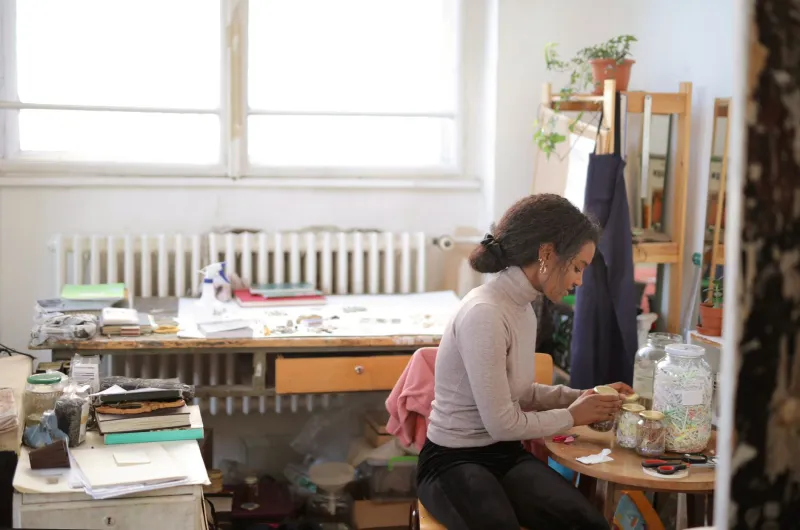
Let's be honest about something most art education glosses over: the fantasy studio — flooded with north-facing light, walls of organized supplies, a dedicated space that's entirely yours — is not the reality for most working artists in America. Rent is expensive. Apartments are small. Families share space. Life crowds in.
And yet, the work keeps getting made.
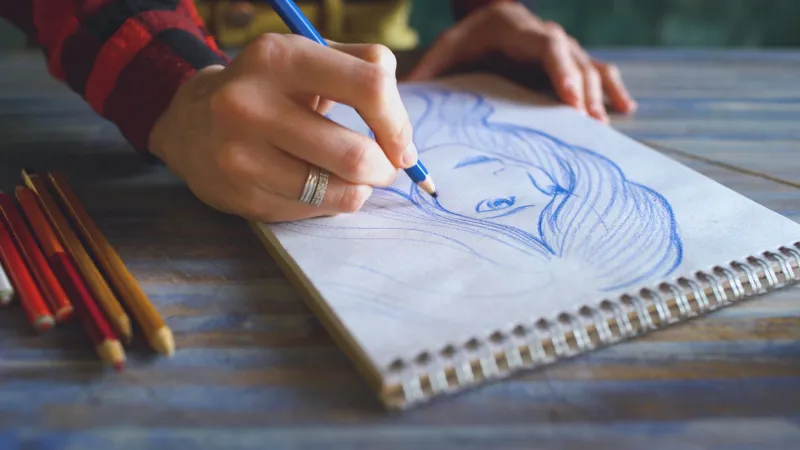
Artists are resourceful by nature. Across the country, painters, illustrators, printmakers, and mixed-media creators are carving out functional, productive creative spaces in the most unlikely corners of their homes — and in many cases, doing some of their most focused, intentional work there. The constraint, it turns out, isn't always the enemy.
Here's a real-world look at how it's done.
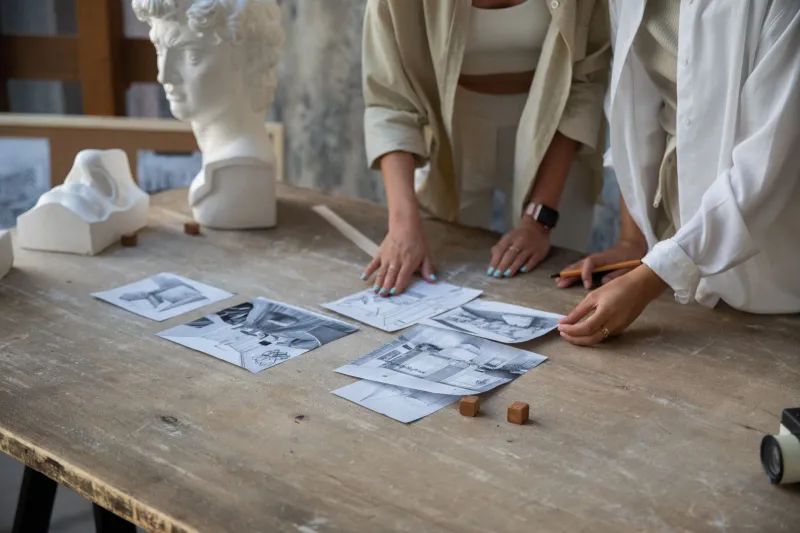
The Kitchen Table Isn't a Compromise — It's a Setup
Ask any illustrator or watercolorist who's worked from a kitchen table and they'll tell you the same thing: once you stop apologizing for the space, you start actually using it.
The key is what designers call a "station mindset" — treating a temporary surface like a dedicated workspace by being intentional about how you set it up and break it down. A shallow rolling cart (the kind you can grab at IKEA or Target for under $40) parked beside the table holds your most-used supplies within arm's reach. A portable cutting mat protects the surface. A simple clip-on daylight lamp — available for $20 to $35 on Amazon — corrects the warm, yellowish cast of most household lighting and gives you something close to a neutral working light.
The setup-and-breakdown ritual, which many artists initially dread, often becomes a surprisingly useful creative habit. Packing up your work at the end of a session forces you to look at it with fresh eyes the next day. Some artists swear it makes them more critical — and more intentional.
Lighting Is the One Thing Worth Spending Money On
If there's a single upgrade that transforms any makeshift space into a workable studio, it's lighting. Poor light doesn't just make your work harder to see — it actively distorts color mixing, flattens value relationships, and makes accurate observation nearly impossible.
The good news: you don't need professional studio lighting to fix this. A daylight-balanced LED bulb (look for 5000K–6500K on the packaging) screwed into an existing lamp can make an enormous difference for under $15. If you're working on a flat surface, a drafting lamp with a flexible arm gives you directional control. For painters working vertically, a clamp light positioned above and slightly to one side mimics the raking light that studio painters have relied on for centuries.
Natural light is obviously ideal when you can get it — but north-facing windows, which give indirect, consistent light without harsh shadows or shifting color temperature, are a luxury most apartment dwellers don't have. If you're working near a south- or west-facing window, a simple sheer curtain diffuses the light without blocking it entirely.
The Garage Studio: America's Most Underrated Creative Space
For artists in houses or ground-floor apartments with garage access, this is often the most overlooked option — and one of the most practical. Garages are already designed to handle mess. They typically have concrete floors, decent ceiling height, and access to power. Temperature control is the main challenge, but a small space heater and a box fan handle most seasons in most parts of the country.
Artists working in garages often find the separation from the main living space genuinely helpful — there's a psychological shift that happens when you walk out the back door into a dedicated work zone, even if that zone smells like motor oil and old cardboard.
A secondhand folding table, a pegboard for tool and supply storage (hardware stores sell these for less than $30), and a few shelving units can turn a half-car garage into a surprisingly capable studio. Printmakers, sculptors, and mixed-media artists especially benefit from the extra floor space and the freedom to make a mess without worrying about the carpet.
Small Space Storage: Think Vertical, Think Modular
Storage is where most improvised studio spaces fall apart. Supplies pile up, surfaces disappear under clutter, and the space stops feeling workable. The fix is almost always the same: go vertical.
Wall-mounted pegboards and magnetic strips take supplies off the horizontal surface and put them in view. Clear stackable bins — the kind sold for pantry organization — work just as well for art supplies and let you see what you have without digging. A shallow rolling cart with multiple tiers can hold an entire watercolor or gouache setup in a footprint smaller than a laptop bag.
For artists in truly tight spaces — studio apartments, shared rooms, dorm situations — a dedicated art supply bag or case that lives under the bed or in a closet creates a clear boundary between "art mode" and everything else. When the bag comes out, work begins. When it goes back, the space belongs to the rest of your life. That mental separation matters more than most people expect.
The Spare Corner: Turning Dead Space Into a Creative Zone
Every home has at least one underused corner — the end of a hallway, the space beside a bookshelf, the wall behind a door that's always open. These dead zones are prime real estate for a compact art setup.
A narrow console table or a wall-mounted fold-down desk (you can find these for $60 to $100 at most furniture retailers) creates a defined workspace without permanently claiming floor space. Pair it with a small rolling stool that tucks underneath and a wall-mounted shelf above for supplies, and you have a functional drawing or writing station that disappears when you need it to.
Digital artists and illustrators working on tablets or laptops have it especially easy here — a single corner, a good chair, and a daylight lamp is genuinely all you need.
Reframing the Constraint
There's a tendency to treat limited studio space as a problem to be solved before the real work can begin — a holding pattern until the right situation comes along. But the artists who consistently make work in improvised spaces have figured something out: the constraint isn't the obstacle. Waiting for perfect conditions is.
Some of the most focused, economical, and formally interesting work in American art history was made in cramped, shared, or makeshift conditions. The environment shapes the work, but it doesn't determine its quality.
Your kitchen table, your garage corner, your 8-square-foot spare nook — these aren't apologies for a real studio. They're where the work actually gets made.
Set it up. Show up. Make the thing.
Looking for more practical guidance on building a sustainable creative practice? Explore Art350's tutorials and community resources at art350.com.