World-Class Art Training Costs Exactly Nothing: Your Complete Guide to Free Creative Education in America
Let's get something out of the way right now: the idea that you need to spend tens of thousands of dollars to receive a serious art education is a myth. A persistent one, sure — but a myth nonetheless. Right now, in cities and towns across America, there are museum study rooms, public library programs, and sprawling digital archives packed with the kind of resources that would make art school professors genuinely jealous. The catch? Most artists have no idea they exist.
Consider this your map.
Start With What the Smithsonian Is Giving Away
The Smithsonian Institution has quietly become one of the most powerful free art education tools on the planet. Through the Smithsonian Open Access initiative, more than 4.7 million high-resolution images — paintings, prints, photographs, objects, and archival materials — are available for anyone to download, study, and even use in their own creative work, completely free of charge.
For a painter studying portraiture, this means being able to pull up a full-resolution Gilbert Stuart or John Singleton Copley and sit with the brushwork for as long as you want. For a printmaker, the archives of the Smithsonian American Art Museum include historical prints you can examine at a level of detail that even standing in the gallery doesn't always allow. Go to si.edu/openaccess and start exploring. Give yourself a full afternoon — you'll need it.
Beyond the digital collection, the Smithsonian's American Art Museum and National Portrait Gallery both offer free in-person admission in Washington, D.C. If you're ever in the area, their study center programs allow visitors to request access to works not on public display. That kind of hands-on access to original art is genuinely rare.
Your Local Library Is More Than Books
Here's something that surprises a lot of artists: the public library system in America has been quietly expanding into creative education for years. And it's not just about borrowing art books, though that's still worth doing — your local branch likely has access to Hoopla and Libby, both of which carry thousands of digital art instruction books and video courses at no cost to cardholders.
But the bigger story is maker spaces. Libraries in cities like Chicago, Los Angeles, Denver, and Columbus have installed fully equipped maker spaces with tools ranging from letterpress printing equipment to laser cutters, vinyl cutters, and large-format printers. The Brooklyn Public Library runs a Digital Media Lab. The Free Library of Philadelphia offers 3D printing and audio production. The Chicago Public Library system has multiple Maker Lab locations offering tools and programming.
Call your local branch and ask what's available. The answer might genuinely surprise you. And if your city doesn't have a robust program yet, many county library systems participate in interlibrary loan networks that can get you access to materials from branches with better resources.
Museum Education Programs That Actually Welcome You
Most major American art museums offer free or reduced admission on specific days or evenings — and many have structured education programs that go well beyond a self-guided walk through the galleries.
The Metropolitan Museum of Art in New York operates on a pay-what-you-wish basis for New York State residents. The Art Institute of Chicago is free to Illinois residents under 14, but also runs free community programs. The Los Angeles County Museum of Art (LACMA) offers free admission every second Tuesday and has an extensive education portal online. The Minneapolis Institute of Art is free every single day, no exceptions.
Beyond admission, look specifically for:
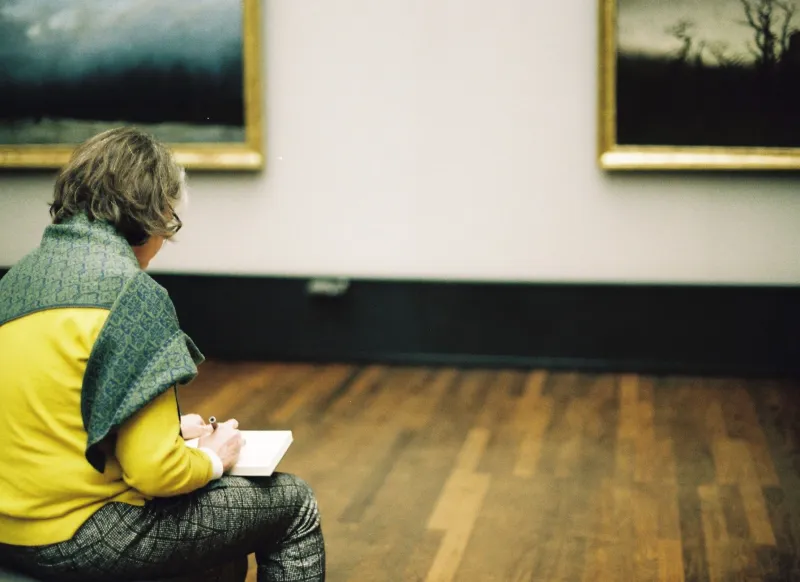
- Gallery sketching programs: Many museums formally invite artists to bring sketchbooks and draw from original works. Some run organized sessions with instructors present.
- Artist talks and lectures: These are frequently free and often feature working professionals discussing their process in depth.
- Teen and adult studio programs: These sometimes have a small materials fee but are otherwise heavily subsidized. Check your local museum's education page directly.
If you're serious about using a museum as a study resource, reach out to the education department directly. Staff are often more accommodating than the website suggests.
Online Archives Worth Bookmarking Right Now
Beyond the Smithsonian, the free digital archive landscape for artists is genuinely extensive. A few that belong in every creative person's browser:
The Metropolitan Museum's Open Access Collection — Over 470,000 images of works in the public domain, downloadable at high resolution. The search filters let you narrow by medium, culture, time period, and more. An incredible reference library for anyone studying historical technique.
Artvee — A curated platform aggregating public domain artworks from museums worldwide. Clean interface, easy downloads, and a surprisingly well-organized browse-by-style feature.
The Library of Congress Prints and Photographs Online Catalog — Hundreds of thousands of historical images including WPA-era posters, documentary photographs, and architectural drawings. Essential for anyone interested in American visual history or design.
Google Arts & Culture — Street View-style virtual tours of hundreds of museums, plus ultra-high-resolution image tools that let you zoom into brushwork and surface texture in ways physical gallery visits rarely allow.
The Internet Archive — Millions of out-of-copyright books including vintage art instruction manuals, anatomy references, and design guides. Search for titles by Andrew Loomis, Bridgman, or any classic art educator and you'll likely find the full text available for free reading or download.
Skill-Level Roadmap: Where to Begin
If you're newer to making art, start with your local library's digital resources — Hoopla and Libby are low-friction entry points that don't require any planning. Pair that with free museum visits to develop your eye before worrying too much about technique.
If you're at an intermediate level and already have a practice going, the Smithsonian Open Access and the Met's collection become genuinely powerful reference tools. Use them the way working artists historically used academic study — sustained, intentional, focused on specific problems you're trying to solve in your own work.
If you're more advanced and looking to deepen your understanding of a particular tradition or medium, the Library of Congress and Internet Archive open up historical research that used to require either a university affiliation or a lot of expensive travel. That access is now sitting in your browser.
The Real Shift in Thinking
The most important move here isn't logistical — it's mental. Free resources carry a social stigma that paid programs don't, and that stigma keeps a lot of talented artists from taking them seriously. But the works hanging in the Smithsonian and the Met aren't somehow less instructive because admission is free. The anatomy drawings in the Internet Archive don't become less useful because you didn't pay $40 for a reprint.
The artists who are going to make the most of this moment are the ones who decide to treat free resources with the same seriousness and intentionality they'd bring to an expensive course. Show up consistently. Take notes. Set goals. Return to the same materials repeatedly rather than skimming across everything.
World-class creative education is already available to you. All it requires is the willingness to go get it.