No Degree, No Problem: How Self-Taught Artists Are Earning Their Place on Gallery Walls Across America
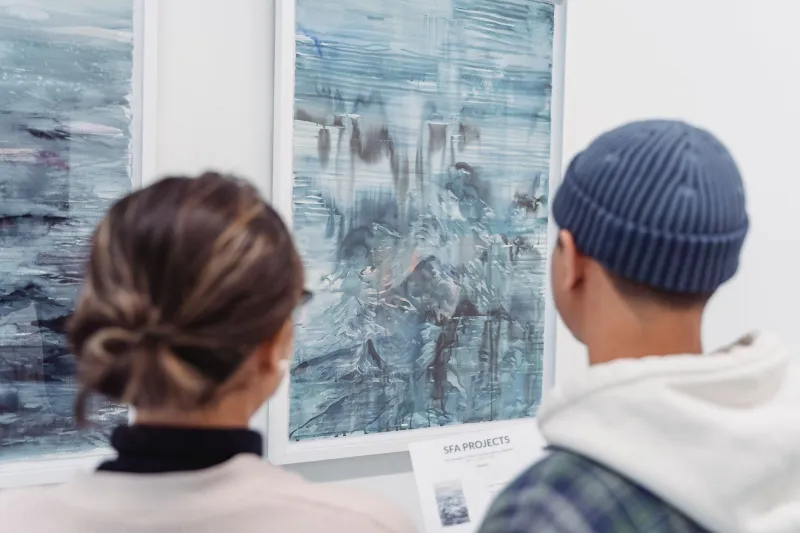
For a long time, the story of "making it" in fine art followed a pretty predictable script. BFA from a respected program, MFA from somewhere with name recognition, a thesis show that catches the right eye, a gallery introduction through a professor's contact list. It was a path with a clear on-ramp — and a very narrow one.
That script is being rewritten. Across the country, artists who never set foot in an MFA program are showing in respected galleries, selling to serious collectors, and building careers that would have seemed impossible to access without formal credentials a generation ago. The gatekeeping hasn't disappeared entirely, but the gates have multiplied — and some of them are standing wide open.
Why the Old Model Is Losing Its Grip
A few forces have converged to shake up the traditional fine art pipeline.
Social media gave artists a direct line to audiences, collectors, and curators without needing institutional backing. Online portfolio platforms made it possible to present work professionally without a gallery's endorsement. And a broader cultural conversation about access and representation pushed many arts organizations to actively seek out voices that formal art education had historically overlooked.
The pandemic accelerated all of it. Virtual art fairs, online open calls, and digital residencies normalized participation from artists who weren't embedded in major art-world cities. Someone working out of a home studio in Tulsa or Boise or rural North Carolina suddenly had the same access to an open call submission form as someone in Brooklyn.
None of this means the path is easy. But it does mean the path exists.
Open Calls: The Most Underused Entry Point
If there's one piece of advice that working non-traditional artists give consistently, it's this: submit to everything.
Open calls — juried exhibitions, residency applications, grant opportunities — are genuinely open. They don't ask for your degree. They ask for your work and, often, a statement about your practice. For self-taught artists, that's a level playing field.
Organizations like the Joan Mitchell Foundation, the Pollock-Krasner Foundation, and countless regional arts councils offer grants and opportunities that explicitly welcome artists without formal training. Many juried shows through local and regional arts centers actively prioritize community artists over credentialed ones.
The key is treating open calls like a practice, not a lottery. Research the curatorial lens of each show. Tailor your artist statement to speak to what that particular organization values. Submit consistently — not desperately, but regularly. Artists who break through this way almost universally describe a period of patient, persistent submission before anything clicked.
Artist Residencies: Credibility Without a Classroom
Here's something the art world doesn't advertise loudly enough: a residency on your bio carries real weight, and many residencies specifically seek out self-taught artists.
Residencies do several things at once. They give you structured time to develop work. They place you in community with other artists. And they signal to galleries and collectors that your practice has been recognized and supported — which functions, in a practical sense, a lot like a credential.
Programs like the Vermont Studio Center, Ox-Bow School of Art, and the Hambidge Center in Georgia all offer need-based fellowships and welcome applicants from non-traditional backgrounds. Community-based residencies through local arts organizations often have even lower barriers to entry and strong regional networks attached to them.
For artists who can't take extended time away, virtual and hybrid residencies — which expanded dramatically post-2020 — offer structured cohort experiences without requiring relocation.
Building a Portfolio That Opens Doors
A gallery-ready portfolio isn't about quantity. It's about coherence.
Galleries and jurors are looking for evidence of a developed, consistent practice — a point of view that comes through across multiple works. This is something a self-taught artist can absolutely demonstrate, and in some cases demonstrates more authentically than someone whose style was shaped by academic convention.
Your online presence matters more than it ever has. A clean, well-photographed portfolio on your own website — not just an Instagram grid — communicates professionalism. Include an artist statement that's written in your own voice, not in art-world jargon. Collectors and curators often say they can tell when a statement was written to impress rather than to communicate.
High-quality documentation of your work is non-negotiable. Poorly lit, skewed phone photos will disqualify otherwise strong work at the submission stage. Investing in proper photography — or learning to do it yourself — is one of the highest-return investments a developing artist can make.
Community Arts Organizations: Your Actual On-Ramp
One of the most underestimated pathways into the fine art world runs directly through local and regional arts organizations.
Artist co-ops, community galleries, and arts councils exist in nearly every mid-size American city, and they serve a function that's easy to overlook: they build your network and your exhibition history simultaneously. Showing in a well-run community gallery gives you something real to list on your CV. It connects you with other artists who know the local landscape. And it puts your work in front of people — including collectors and curators — who are actively looking for emerging talent.
Organizations like the National Association of Artists' Organizations (NAAO) can help you find community arts infrastructure in your area. Many regional arts councils maintain databases of opportunities specifically designed for emerging and non-traditional artists.
Real Artists, Real Paths
The stories are out there if you look for them. Artists who spent years making work in relative obscurity before a juried show opened a gallery conversation. Painters who built collector relationships through Instagram before they had a single show on their resume. Sculptors who applied to the same residency three times before being accepted — and whose careers shifted meaningfully after that acceptance.
What these paths have in common isn't luck or connection. It's a sustained commitment to the work, a willingness to engage strategically with the opportunities available, and a refusal to treat the absence of a degree as a disqualifying fact.
The Fine Art World Is Bigger Than It Looks
The version of the art world that feels impossible to enter — the white-walled Chelsea galleries, the blue-chip auction houses, the invitation-only collector dinners — is real, but it's also just one corner of a much larger ecosystem.
There are thousands of galleries across the US, most of them outside major art-world centers, many of them actively seeking work that feels fresh and unconventional. There are art fairs at every scale, from Art Basel Miami to regional shows that draw serious local collectors. There are online platforms connecting artists directly with buyers, residencies in unexpected places, and grant programs specifically designed to support artists the traditional pipeline missed.
The fine art world isn't a single door. It's a building with a lot of entrances. The job isn't to find the secret password — it's to start knocking.