Grow Your Audience, Keep Your Soul: How Artists Are Building Real Communities Online Without Losing Themselves
Let's be honest for a second. If you've ever posted a piece of work you were genuinely proud of and watched it get eight likes while some throwaway behind-the-scenes Reel racked up thousands of views, you know the particular frustration of being an artist online. It feels like the internet rewards everything except the actual art.
But here's what's shifting: a growing number of US-based visual artists are finding their footing on social platforms — not by gaming the system, not by becoming influencers in the traditional sense, but by being genuinely, strategically themselves. And the communities they're building? They're converting into real careers.
This isn't a guide to going viral. It's a guide to going somewhere that actually matters.
The Vanity Metric Trap (And Why Follower Count Is the Wrong Goal)
Followers are easy to fixate on. They're visible, they're comparable, and they feel like a report card. But here's the thing — a ceramicist in Asheville with 4,200 followers who sells out every kiln run has built something more valuable than a painter with 80,000 followers who can't move a print.
The metric that actually predicts sustainable success isn't reach. It's resonance. You want to look at saves, DM conversations, repeat commenters, and most importantly, click-throughs to your website or shop. These are the signals that tell you whether people are genuinely invested in your work or just scrolling past.
Engagement rate — calculated by dividing total interactions by total followers — is a much more honest number. A 5–8% engagement rate on a smaller account will outperform a 0.5% rate on a massive one almost every time when it comes to actual sales, commissions, and community loyalty.
What a Content Framework Actually Looks Like for Visual Artists
You don't need a content calendar that reads like a marketing agency's deck. But having a loose framework — a rhythm — takes the daily decision fatigue out of posting and keeps your feed from feeling scattered.
A simple structure that works for a lot of artists breaks down into three buckets:
1. The Work Itself Finished pieces, works in progress, details and close-ups. This is the core of what you do, and it should anchor your presence. Don't underpost your actual art in favor of lifestyle content. Your work is the reason people showed up.
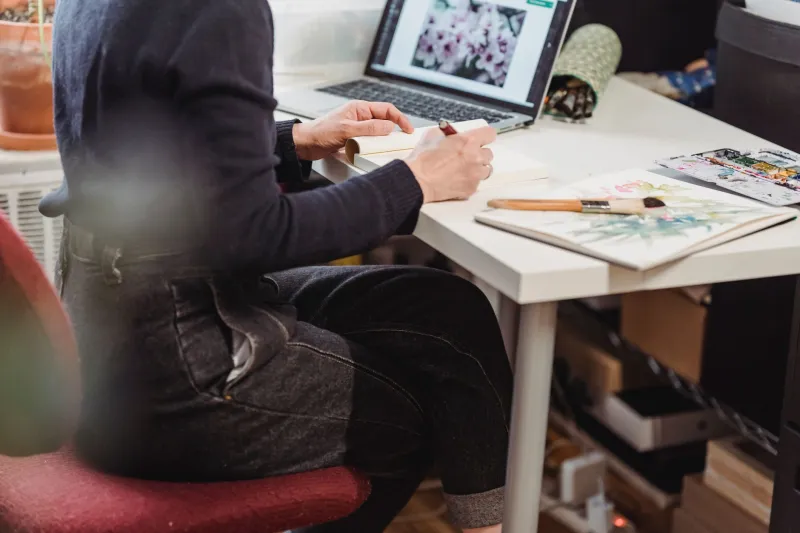
2. The Process This is where platforms like TikTok and Instagram Reels genuinely shine for artists. Time-lapses, studio walkthroughs, narrated technique videos — these pull people behind the curtain in a way that static images can't. They also tend to reach new audiences because they're inherently watchable. You're not selling; you're showing.
3. The Person Your perspective, your influences, your failures, the weird corner of art history you're obsessed with, the question you're currently wrestling with in your practice. This is what turns a follower into a fan. People don't just buy art — they buy into the artist. Letting your actual personality come through, even occasionally, builds the kind of trust that no algorithm tweak can manufacture.
Aim for a rough ratio of something like 50% work, 30% process, 20% person. Adjust it to fit your style — but if you're only posting finished pieces and nothing else, you're leaving a lot of connection on the table.
Platform Personalities: Where Should You Actually Be?
Not every platform is worth your time, and spreading yourself across all of them usually means doing none of them well.
Instagram remains the strongest home base for visual artists in the US. The grid still matters for establishing credibility, but Stories and Reels are where discoverability actually happens right now. If you're only posting to your feed and ignoring Reels, you're essentially whispering in a crowded room.
TikTok has become a legitimate discovery engine for artists — particularly those whose work involves visible process. Illustrators, painters, sculptors, and muralists have found huge audiences here by simply filming themselves working. The culture on TikTok tends to reward authenticity over polish, which is good news for artists who aren't interested in producing slick branded content.
Pinterest is criminally underrated for artists, especially those whose work skews toward home decor, illustration, or design-adjacent aesthetics. It functions more like a search engine than a social feed, which means content has a much longer shelf life. A well-optimized Pin can drive traffic to your shop for years.
Pick two. Get consistent. Then evaluate.
Real Artists, Real Results
Look at what's actually working for US-based creators right now and a few patterns emerge.
Illustrators who narrate their work — talking through their inspiration, their color choices, their doubts — tend to build communities that feel like conversations rather than audiences. Printmakers who document the full arc of a project, from concept sketch to edition, attract collectors who feel genuinely invested by the time the work is for sale. Painters who share their influences and reference images pull in followers who are curious and engaged, not just passive scrollers.
What these artists have in common isn't a particular posting frequency or a specific aesthetic filter. It's intentionality. They've thought about what they want to share and why, and that comes through.
The "Selling Out" Fear Is Real — But It's Also Manageable
A lot of artists hesitate to engage seriously with social media because it feels like it'll compromise something. Like leaning into the marketing side means the art side has to shrink.
It doesn't have to work that way. The key is keeping your creative practice separate from your content strategy. Make the work first, always. Then decide what's worth sharing and how. You're not obligated to document everything, perform your process, or post on a schedule that doesn't fit your life.
The artists who burn out on social media are usually the ones who let the platform dictate their creative decisions — making work they think will perform well rather than work they actually care about. That's where the soul-selling happens, and it's entirely avoidable.
Post from a place of abundance, not anxiety. Share because you want to, not because you feel like you have to. Your audience will feel the difference.
Building Something That Lasts
Here's the long game: social media is a starting point, not the destination. The artists who turn online followings into sustainable careers are the ones who use those platforms to funnel people toward something they own — an email list, a website, a Patreon, a shop.
Algorithms change. Platforms rise and fall. But a list of people who've actively chosen to hear from you? That's yours.
Start building that bridge now, even if your following is small. A thousand people who genuinely care about your work and have given you their email address are worth more than ten thousand passive followers who discovered you once and forgot.
You don't have to choose between making real art and building a real audience. The artists proving that every day are the ones who decided to stop treating those two things as opposites — and started letting one feed the other.