Steal Like Michelangelo: In Defense of Copying Your Way to Better Art

Photo: Bijay Chaurasia, CC BY-SA 4.0, via Wikimedia Commons
Let me make an unpopular argument: the fastest way to level up your painting might be to paint somebody else's painting.
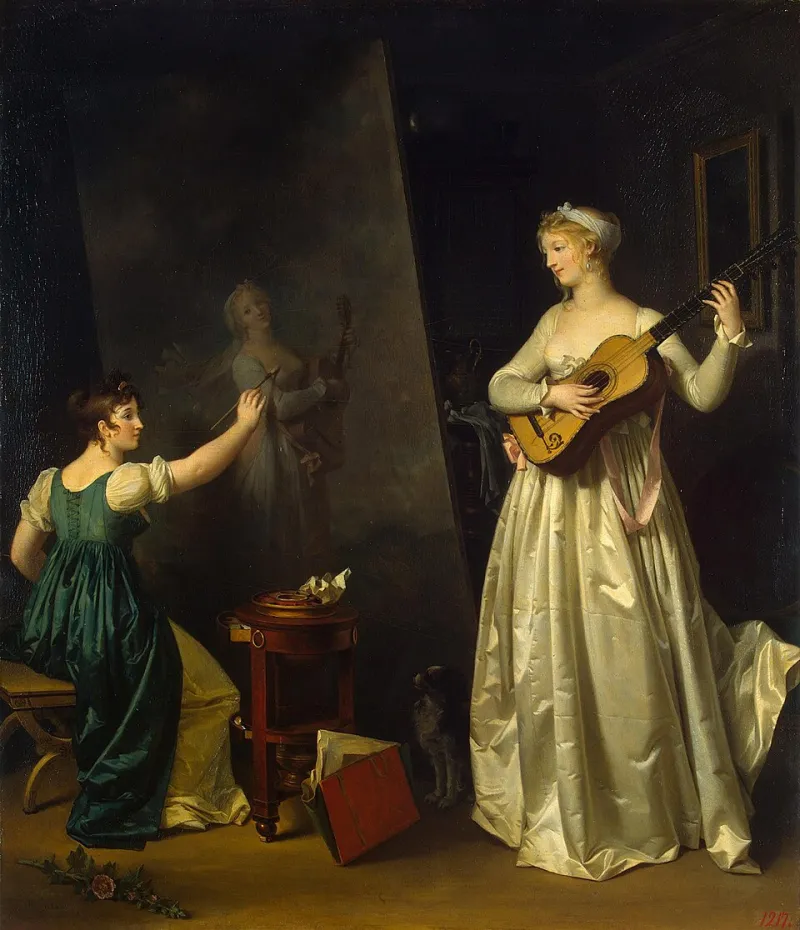
Not "be inspired by." Not "make work in the style of." Actually copy it. Reproduce a Rembrandt self-portrait, a Sargent watercolor, a Hopper street scene — stroke by stroke, decision by decision — until you understand why it works.
If that sounds like cheating, you're in good company. It's also what Michelangelo did, copying frescoes in Florence before he was a teenager. It's what Degas did, filling notebooks with Ingres. It's what Van Gogh did — repeatedly, obsessively, copying Millet long after he no longer needed to. Nearly every artist we now call an original was, first, an unoriginal and devoted copyist.
Somewhere along the way, art education in America decided this was embarrassing. I think we got it wrong.
Why Copying Beats Watching
A YouTube tutorial tells you how someone painted. Copying makes you find out. The difference is enormous.
When you copy a masterwork, you can't skip the hard questions. Why did Sargent leave that edge soft? Why is that shadow warmer than it should be? Why does the composition hold together when you squint? A tutorial hands you answers. A copy forces you to reverse-engineer them — and reverse-engineering is where real learning lives.
There's also the matter of calibration. Beginners almost always overdo everything: too much contrast, too much detail, too many colors. Copying a great work is like a pitch-correction exercise for your eye. You aim at the original, and every miss shows you exactly where your instincts are off. No instructor's feedback is as precise as a masterpiece sitting six inches from your canvas.
And the cost? Essentially zero. You need one reproduction, your existing materials, and time.
The Legal and Ethical Fine Print
Copying has rules, and they're actually pretty clear:
- Old masters are fair game. Work by artists who died more than 70 years ago is in the public domain in the US. Copy a Vermeer to your heart's content.
- Living and recent artists are not. Copying a living artist's work for private study is generally fine; selling it, exhibiting it as your own, or posting it without clear attribution is not. Always credit: "Study after [artist]."
- Never sign it as yours. This is the bright line. A copy is a study. Say so, on the work itself.
Museums That Want You There
Here's the part most artists don't know: many major American museums invite copyists. The tradition is centuries old, and it's alive:
- The National Gallery of Art, Washington, DC runs a formal copyist program — apply, get a permit, and you can set up an easel in the galleries on scheduled days.
- The Metropolitan Museum of Art, New York permits copying with advance permission and has specific rules about easel size and materials (dry media in some galleries, limited oil setups in others).
- The Art Institute of Chicago, the MFA Boston, and the Philadelphia Museum of Art all have copyist policies — usually requiring an application a couple of weeks ahead and, for oils, restrictions on solvents and canvas size.
Even without a formal program, most museums allow sketching in notebooks or on pads from a seat. Dry media, no tripods blocking traffic, no flash — and you're in. Call ahead; policies vary by exhibition, especially for loaned works under copyright.
There is something almost indescribable about standing in front of the actual painting, brush in hand, trying to match a color you thought you understood from a screen. The screen lied. The painting always has more to say.
How to Copy Well (Not Just Carefully)
A copy that teaches you something isn't the one that looks most identical. Try this approach:
- Pick a work slightly above your level. Not a Rembrandt if you've never painted a face. A small portrait study, a simple landscape.
- Copy the structure first. Spend your first session on nothing but the drawing and the big value shapes. Don't touch color yet.
- Limit your palette to what the artist likely used. Guessing the palette is half the education.
- Write down every confusion. "Why is her collar almost white?" Those questions are the actual curriculum.
- Put it away for a week, then look. The distance tells you what you actually absorbed.
The Counterargument, Honestly Considered
The fear is real: will copying kill your originality? Only if you stop there. Copying is the studying, not the making. Michelangelo copied, then carved David. The artists who get stuck are the ones who copy forever, or who never copy at all and spend years reinventing solutions that already exist.
Do both. Copy deliberately, then turn away and make your own work with better tools in your hands.
Every art school used to know this. Your sketchbook can know it again.