Your Body Already Knows When to Paint: A One-Week Experiment in Creative Chronobiology
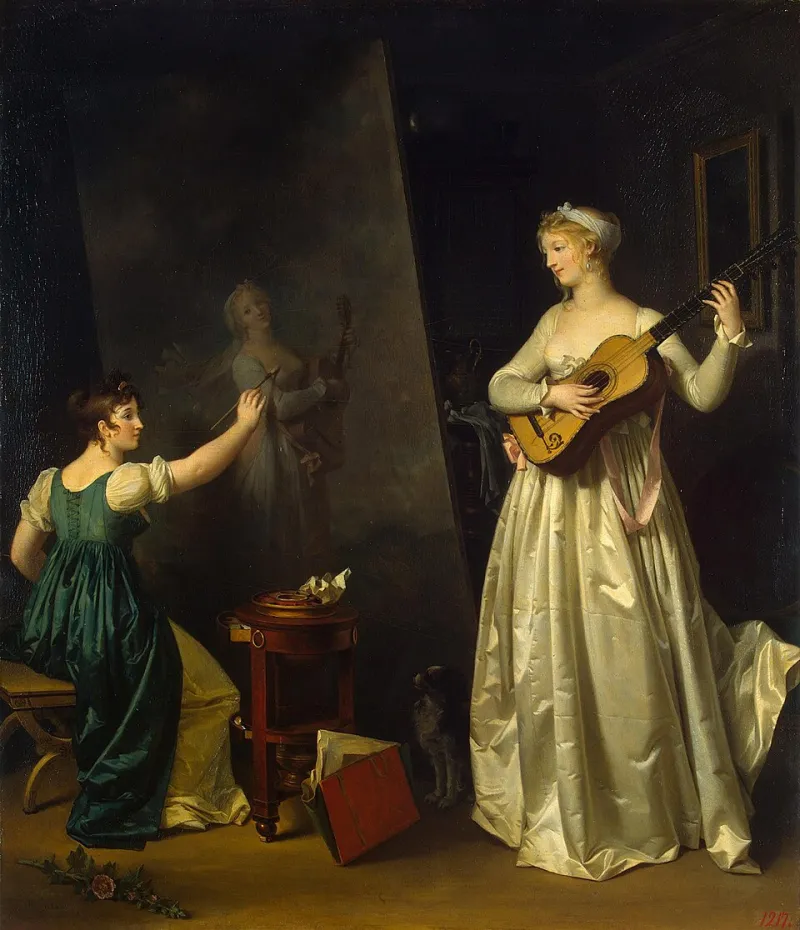
Photo: Marguerite Gérard, Public domain, via Wikimedia Commons
Here's a confession that might sound familiar: I've spent years feeling guilty about the 3 PM slump. That foggy stretch after lunch where the palette looks duller, the brushstrokes get heavier, and every decision feels wrong. I assumed it was a discipline problem.
Turns out, it might be a biology problem. And the fix isn't more caffeine or more willpower — it's a calendar.
Your Brain Has a Schedule (Whether You Like It or Not)
Chronobiology — the study of our internal clocks — has known for decades that focus, problem-solving, and creative thinking don't run at a steady hum all day. Most people experience peaks and valleys that follow predictable patterns tied to their circadian rhythm.
The interesting wrinkle for artists: analytical thinking and creative insight tend to peak at opposite times. Research out of Michigan State and other labs has suggested that when you're slightly tired — not exhausted, just off your A-game — your brain is better at making unusual connections. That's the loose, associative thinking that fuels invention. When you're razor-sharp, you're better at critique, precision work, and finishing touches.
So the painter who saves detailed rendering for her 9 AM sharpness window and brainstorms compositions at 8 PM might not be eccentric. She might be optimized.
Three Artists, Three Clocks
The night owl. Marcus, an illustrator in Portland, Oregon, spent a decade forcing himself into a "professional" 9-to-5 studio schedule and producing work he quietly hated. Two years ago he flipped his hours: errands and admin in the morning, ink work from 9 PM to 1 AM. His output doubled, and — more tellingly — he stopped dreading the studio. "My best ideas were always showing up at midnight," he says. "I just kept sending them away."
The dawn painter. Denise, a watercolorist outside Asheville, North Carolina, wakes at 5:30 and paints before anyone in her house stirs. For her it's less about circadian science and more about interference: no emails, no notifications, no decisions except color and light. "By 8 AM I've already had my best hour of the day," she says. "Everything after that is bonus."
The lunch-break sketcher. Andre, a graphic designer in Chicago, doesn't have a studio at all. He sketches in the plaza near his office for 25 minutes a day, usually around noon. His secret weapon is the slump itself — lunchtime sketching requires zero decision-making. He draws what he sees, no plan, no pressure. Over three years, those throwaway sketches became the basis for his first gallery show.
Three different clocks. Three different practices. The common thread isn't when they work — it's that they stopped fighting their own wiring.
The One-Week Experiment
You don't need a sleep lab to figure out your creative rhythm. You need a notebook and seven days.
Day 1–2: Log your energy. Set a phone alarm for every two hours from waking to bedtime. When it goes off, rate your mental state from 1 (foggy) to 5 (electric). Takes ten seconds. Don't overthink it.
Day 3–5: Test your studio hours. Schedule short creative sessions — even 30 minutes — at three different times: your sharpest logged hour, your sleepiest logged hour, and one in between. Make the same kind of work each time (same medium, similar subject) so you're comparing apples to apples.
Day 6–7: Look for the pattern. Two questions matter:
- When did the work come easily? That's probably your invention window — guard it for generating ideas and starting pieces.
- When were you best at fixing things? That's your editing window — use it for refinement, critique, and finishing.
Most people discover a mismatch: they've been spending their sharpest hours on email and their fuzziest hours on the work that matters most.
A Few Honest Caveats
This isn't a magic system. If you have a day job, small children, or a commute, you can't always choose your hours — and some of the best art in history was made in stolen time. The goal isn't a perfect schedule; it's awareness. Knowing that your 3 PM fog is biology, not failure, is oddly liberating. It turns "what's wrong with me?" into "what should I be doing right now instead?"
Also worth saying: consistency beats optimization. A mediocre hour every day will outproduce a perfect hour you keep canceling.
But if you've been treating your internal clock like an enemy, consider a truce. Run the experiment. Track the data. Then give your best ideas the hours they've been asking for all along.
Your 3 PM self might thank you.