Art Moves in Waves: What 350 Years of Creative Revolution Can Tell You About Right Now
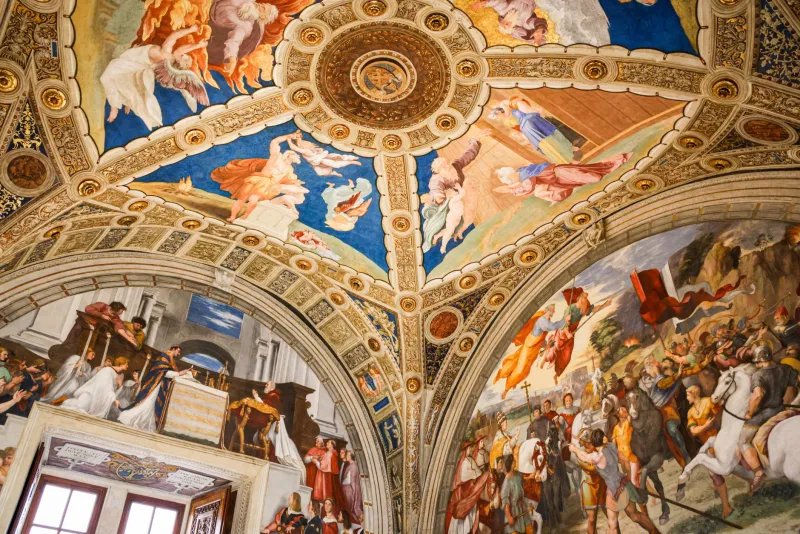
Here's something art history teachers don't always spell out clearly: the story of Western art isn't a straight line. It's a pulse. Compress the last three-and-a-half centuries into a single timeline and a pattern starts to emerge — periods of rigid order giving way to emotional explosion, followed by cool intellectualism, followed by chaos, followed by order again. Rinse, repeat.
That cycle matters. Not just as a trivia point, but as a practical lens for understanding where creative culture is headed — and where you fit into it.
The Pattern Behind the Movements
Start with the Baroque period of the 17th century. After the fractured tensions of the Reformation, European artists responded with drama, grandeur, and overwhelming emotional intensity. Caravaggio used shadow like a weapon. Bernini made marble look like it was breathing. The art of that era wasn't subtle — it was designed to move people at a gut level, partly because the Catholic Church needed a visual counter-argument to Protestant restraint.
Then came the Enlightenment, and with it, Neoclassicism. By the mid-1700s, artists were pulling back hard. Emotion was out. Reason, order, and classical Greek and Roman ideals were back in. Jacques-Louis David's paintings look almost cold compared to the Baroque excess that preceded them — and that was entirely the point.
Predictably, the pendulum swung again. Romanticism exploded in the early 19th century as a direct rejection of Enlightenment rationalism. Artists like Delacroix and, in America, the Hudson River School painters, turned back toward emotion, nature, and individual experience. The self — raw, feeling, complicated — became the subject.
You can trace this rhythm right through Impressionism's sensory rebellion against academic painting, through the hard geometric logic of Cubism and Constructivism, into Abstract Expressionism's postwar emotional fury, and then the cool, ironic detachment of Pop Art and Minimalism that followed almost immediately after.
Each swing takes roughly a generation — sometimes a little more, sometimes less — and each one is almost always triggered by the same three forces: technology, politics, and cultural upheaval.
Why the Triggers Matter
The invention of the camera didn't kill painting — it freed it. Once photography could handle realistic documentation, painters no longer had to. That single technological shift cracked open everything from Impressionism to Abstraction.
Political trauma works the same way. Abstract Expressionism didn't emerge in a vacuum. It was born directly from the psychological wreckage of World War II, the anxiety of the atomic age, and a generation of European artists who had fled to New York and cross-pollinated American sensibilities with a kind of existential urgency that hadn't existed in US art before.
Cultural upheaval — the Civil Rights Movement, the counterculture of the 1960s, second-wave feminism — drove parallel shifts in who got to make art, what subjects were considered valid, and whose stories the art world was willing to tell.
The pattern holds because people hold it. Human beings process collective trauma and transformation through creativity. When the world gets turned upside down, artists respond. They always have.
So Where Are We Right Now?
Honestly? We're in one of the more genuinely chaotic moments in the cycle — and that's exciting, even when it's disorienting.
Digital tools have done to contemporary art what the camera did to 19th-century painting: they've demolished old gatekeeping structures and forced a reckoning with what art even is. AI-generated imagery, NFTs, digital illustration, and social media as a primary exhibition space have compressed the traditional gallery-to-audience pipeline almost beyond recognition.
At the same time, there's a massive counter-movement happening. Craft is surging. Ceramics, printmaking, fiber arts, oil painting — anything made by hand — are experiencing a cultural renaissance that feels, frankly, very Romantic in spirit. People are craving the tactile and the human-made precisely because so much of visual culture has gone digital.
If history is any guide, we're somewhere in the early-to-middle phase of a genuinely significant shift. The dust hasn't settled. The dominant aesthetic of this era hasn't fully crystallized yet. Which means — and this is the part worth sitting with — the artists working right now are the ones who will define what this period looks like in retrospect.
What This Actually Means for Your Practice
Understanding historical cycles isn't just an intellectual exercise. It has real implications for how you think about your own work.
First, stop trying to be timeless. The artists we remember weren't trying to make art that would last forever — they were responding urgently to their own moment. Caravaggio wasn't thinking about museum walls. Basquiat wasn't making work for auction houses. Make work that's honest about right now, and let history sort itself out.
Second, pay attention to the friction. In every major transition period, the most interesting work happens at the collision point between the old and the new. Right now, that collision is everywhere — between analog and digital, between individual expression and algorithmic curation, between global art markets and hyperlocal community-based art scenes. Those tension points are generative. Lean into them.
Third, study the swings that came before yours. Not to copy them, but to recognize the emotional and intellectual logic underneath them. When you understand why Minimalism emerged as a reaction to Abstract Expressionism's maximalism, you start to see the same dynamic playing out in contemporary design, in social media aesthetics, in the resurgence of quiet, slow art.
History doesn't repeat exactly. But it does rhyme — and learning to hear the rhyme makes you a sharper, more intentional creative.
The Long View Is Actually a Gift
It can feel overwhelming to make art in a moment this noisy and transitional. The platforms keep changing. The definitions keep shifting. What counts as legitimate creative work seems up for debate every other week.
But zoom out. Every artist who ever made work that mattered did it during a period that felt, to them, equally uncertain and overwhelming. The Impressionists were rejected by the official Salon. The Abstract Expressionists were working in a country still figuring out its cultural identity. The uncertainty isn't a bug in the creative process — it's a feature.
You're not behind the wave. You're in it. And that's exactly where the interesting work gets made.