Doubt Is Your Superpower: The Surprising Truth About Uncertainty and Creative Growth
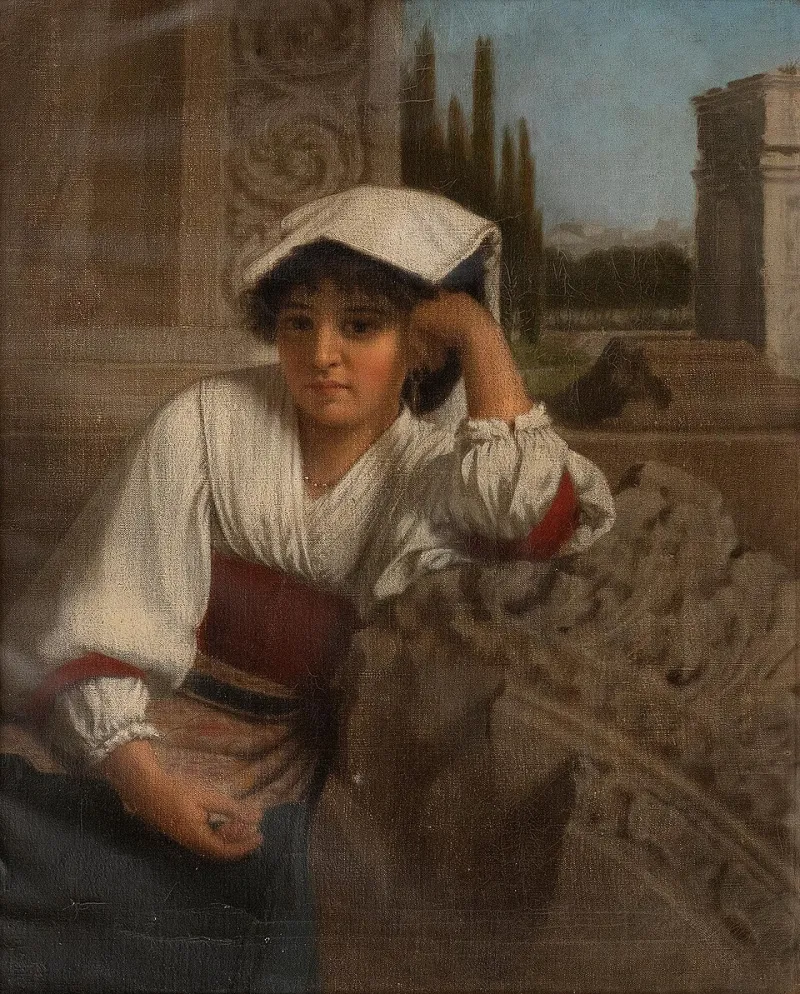
Photo: John Frederick Lewis, Public domain, via Wikimedia Commons
There's a story we keep telling about artists. It goes something like this: the great ones are bold. They stride into the studio knowing exactly what they're doing. They don't second-guess the brushstroke. They don't lie awake wondering if the whole piece is a disaster. They just make, and the world receives it.
That story is mostly fiction — and it might be quietly wrecking your creative development.
Here's what the research actually shows: artists who carry moderate self-doubt tend to produce more experimental, more refined, and ultimately more original work than their supremely confident counterparts. That nagging voice asking is this good enough? isn't a sign that you're failing. In many cases, it's a sign that you're paying attention.
The Psychology Behind Creative Uncertainty
Psychologists have a name for the phenomenon where people with limited skill overestimate their own competence: the Dunning-Kruger effect. Most people have heard of it. What gets talked about less is the flip side — that as genuine expertise develops, self-assessment becomes more critical, not less. The more you know, the more clearly you see the gap between where you are and where you could be.
For artists, that gap is the engine room.
A 2019 study published in the Journal of Creative Behavior found that individuals who reported higher levels of creative self-doubt were more likely to seek out feedback, iterate on their work, and push past their first instincts toward less predictable solutions. In plain terms: doubt kept them in motion. Confidence, unchecked, let them stop too soon.
This tracks with what working artists describe all the time, even if they don't always frame it this way. The painter who thinks every canvas is already good enough rarely experiments with new techniques. The illustrator who never questions their style never discovers what else they're capable of.
The Fearless Artist Myth — and Why It's Holding You Back
American creative culture has a complicated relationship with confidence. We celebrate the bold claim, the artist who declares their vision without apology. And there's real value in that — creative courage matters. But somewhere along the way, the message shifted from be willing to take risks to never doubt yourself, and those are very different things.
When doubt gets rebranded as weakness, artists start hiding it. They perform certainty in critiques. They post finished work without acknowledging the thirty versions that came before. They stop asking questions in workshops because asking questions feels like admitting you don't already know.
The result? A creative culture that's more polished on the surface and less adventurous underneath.
Art history tells a more complicated story. Cézanne reportedly destroyed enormous amounts of work he felt was unresolved. Agnes Martin spoke openly about the anxiety and uncertainty that drove her practice. Even Picasso — often held up as the ultimate example of creative confidence — was famously restless, constantly dismantling what he'd built to try something new. That restlessness is doubt. It just looked like boldness from the outside.
What Doubt Actually Does in the Studio
When self-doubt is functioning well — when it's moderate rather than paralyzing — it performs a few specific jobs in your creative practice.
It keeps you curious. An artist who isn't sure they've solved the problem keeps looking for solutions. That search is where interesting things happen. The unexpected color combination, the structural choice that breaks the composition in a way that somehow works — these tend to emerge from the artist who's still asking questions, not the one who's already answered them.
It makes you coachable. Seeking feedback is one of the highest-leverage things any developing artist can do. But you have to believe the feedback might teach you something. Artists who are certain they've got it figured out don't actually hear critique — they just wait for it to be over. Doubt creates the opening through which real learning enters.
It raises your standards. The internal voice that says this isn't quite right yet is uncomfortable, but it's also the voice that pushes you to the next revision, the better version, the piece that actually does what you wanted it to do. Silencing that voice prematurely is how work stays mediocre.
The Line Between Useful Doubt and Creative Paralysis
None of this is an argument for letting doubt run the show. There's a meaningful difference between the productive uncertainty that keeps you experimenting and the kind of anxiety that won't let you finish anything, share your work, or take the next step.
The goal isn't to cultivate more suffering. It's to stop treating doubt as the enemy and start treating it as information.
When you feel uncertain about a piece, try asking: what specifically feels unresolved? That question turns a vague, uncomfortable feeling into something actionable. Maybe the composition isn't working. Maybe you haven't pushed the color far enough. Maybe you're avoiding something technically difficult that the piece actually needs. Doubt, interrogated, becomes direction.
If the doubt is more generalized — if it's less about this specific piece and more about whether you're any good at all — that's worth examining differently. That kind of doubt often has more to do with comparison, isolation, or creative fatigue than with anything actually wrong with your work. Getting feedback from people you trust, connecting with a creative community, or simply making something low-stakes just for yourself can help recalibrate.
Reframing the Story You Tell Yourself
There's a reframe worth trying. Instead of hearing that internal critical voice as proof that you don't belong in the studio, try hearing it as proof that you care — and that you're paying close enough attention to know the difference between where your work is and where it could be.
That's not a small thing. Plenty of people make art without caring that much. The fact that you're bothered by the gap, that you're unsatisfied with easy answers, that you keep pushing — that's the thing that actually develops a practice over time.
The artists who grow aren't the ones who never doubted. They're the ones who learned to work with the doubt instead of waiting for it to go away.
So the next time that voice shows up in the studio, maybe don't fight it. Maybe just ask it what it's trying to tell you.