350 Minutes a Week: The Surprisingly Simple Practice Habit That Separates Growing Artists From Stuck Ones
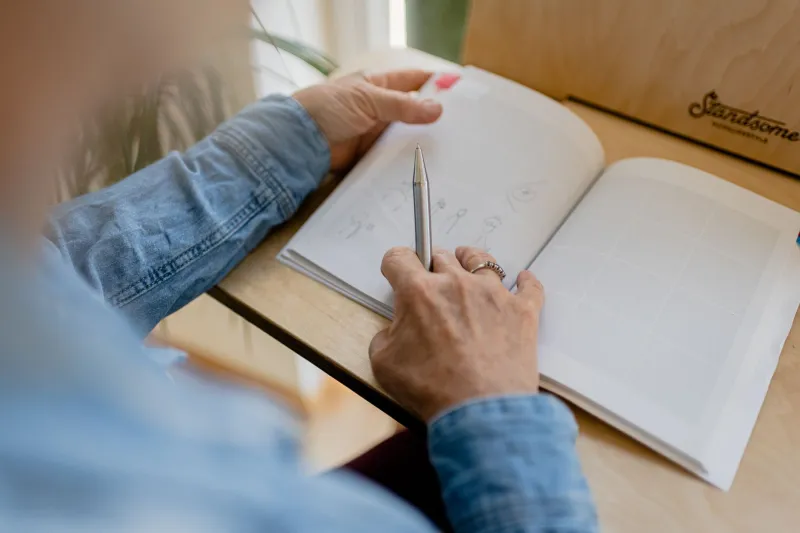
Why Most Artists Struggle to Improve (It's Not What You Think)
There's a persistent myth in creative circles that talent is the primary driver of artistic growth. You either have it or you don't. Your eye is either trained or it isn't. Some people are just built for this.
Research disagrees — loudly.
For decades, psychologists and performance scientists have studied what actually separates artists, musicians, athletes, and writers who improve rapidly from those who plateau. The answer isn't raw talent. It's the quality and consistency of their practice. And one of the most counterintuitive findings? You don't need enormous blocks of time. You need regular ones.
Enter the 350 Rule.
What Is the 350 Rule?
Here at Art350, our name isn't just a logo — it's a philosophy. The 350 Rule is simple: commit to 350 minutes of intentional creative practice per week. That breaks down to roughly 50 minutes a day, seven days a week. Or, if weekends are sacred rest time, about 70 minutes across five days.
Fifty minutes. That's shorter than most TV episodes. It's less time than the average American spends scrolling their phone before bed.
The magic isn't in the number itself — it's in what that number represents: a threshold that's demanding enough to produce real growth, but achievable enough that life doesn't constantly derail it. It's the sweet spot between "too easy to matter" and "so hard you quit by February."
The Science Behind the Habit
Psychologist Anders Ericsson, whose research on expertise was later popularized by Malcolm Gladwell's "10,000-hour rule," made an important distinction that often gets lost in translation: not all practice is equal. What drives improvement is deliberate practice — focused, intentional effort aimed at specific weaknesses, with feedback built in.
Ericsson's studies of musicians at the Berlin Academy of Music found that the best performers didn't necessarily practice longer than their peers. They practiced better — with full concentration, clear goals, and honest self-assessment. And critically, elite performers rarely sustained more than four hours of truly deliberate practice per day before diminishing returns set in.
Fifty minutes of genuine, focused art-making? That's well within the zone where your brain is absorbing, adapting, and building skill. Fifty minutes of distracted doodling while watching Netflix? That's a different story entirely.
The 350 Rule asks for the former.
Artists Who Swear By the Daily Practice
You don't have to take the scientists' word for it. Look at the creative professionals who have built lasting careers on the foundation of consistent, daily work.
Chuck Close, the celebrated American painter known for his monumental portrait work, famously said: "Inspiration is for amateurs. The rest of us just show up and get to work." Close painted through serious physical disability, completing large-scale work through sheer systematic commitment to showing up every single day.
Kara Walker, one of the most important visual artists working in America today, has spoken repeatedly about the importance of maintaining a studio practice regardless of whether the muse is cooperating. The work calls you to it; you don't wait to be called.
Even outside the fine art world, illustrators, designers, and commercial artists who build durable careers cite consistency as the variable that separated their growth from their peers. Instagram artists who post daily process sketches don't just build audiences — they build skill at an accelerated rate because they're essentially completing 365 deliberate practice sessions per year.
Your 350-Minute Weekly Schedule (Steal This)
Ready to try it? Here's a sample weekly structure you can adapt to your own medium, schedule, and goals. The key is to define what you're working on before you sit down — vague practice produces vague results.
Monday — Fundamentals (50 min) Pick one foundational skill: value studies, gesture drawing, color mixing, perspective. Work drills, not finished pieces. Think of this like warming up at the gym.
Tuesday — Reference Study (50 min) Choose a work by an artist you admire and try to understand how they did what they did. Copy it, analyze it, take notes. This is one of the oldest learning techniques in art history — every master painter you can name spent years copying the masters before them.
Wednesday — Free Exploration (50 min) No rules, no goals, no pressure to produce something shareable. Experiment with a medium you rarely use, try a subject that intimidates you, or just play. This session feeds your creative subconscious.
Thursday — Project Work (50 min) Return to a current piece or series with fresh eyes. Apply what you've been drilling earlier in the week. Notice what's improved.
Friday — Critique and Reflection (50 min) Look at your week's output honestly. What's working? What isn't? Write three sentences about what you want to improve next week. Review your work alongside reference images. Honest self-assessment is where the real growth lives.
Saturday — Community and Inspiration (50 min) Visit a gallery, browse a course on Art350, engage with other artists' work online, watch a documentary about a creative you admire. Refueling your inspiration is part of the practice.
Sunday — Rest or Bonus Session Protect your rest. Burnout is the enemy of long-term creative growth. If you feel called to create, pick up a sketchbook. If you don't, honor that too.
Total: 300–350 minutes. The 350 Rule, lived out.
Making It Stick
The hardest part of any practice habit isn't the first week — it's weeks three through six, when the novelty has worn off and life has started pushing back. A few things that help:
Anchor your practice to an existing habit. Right after morning coffee, right before dinner, immediately after the kids go to bed. Habit stacking is one of the most reliable behavior-change techniques available.
Track it visibly. A simple paper calendar where you mark each completed session with an X creates what comedian Jerry Seinfeld called "the chain" — a streak you don't want to break. It sounds almost embarrassingly simple. It works.
Join a community doing the same thing. Accountability transforms solo practice. Art350's courses and community spaces are full of artists working through exactly this kind of structured commitment — people who will celebrate your consistency and pull you back when you drift.
The Compound Effect of 350
Here's the math that should excite you: 350 minutes a week is 18,200 minutes a year. That's over 300 hours of deliberate, focused creative practice — built in 50-minute increments that fit inside a normal life.
Most people dramatically overestimate what they can accomplish in a week and catastrophically underestimate what they can accomplish in a year. The 350 Rule is a bet on the long game. It's a quiet, daily commitment to becoming the artist you already know you're capable of being.
Start this Monday. Fifty minutes. Show up, do the work, and let the compound interest of consistent practice do the rest.